- About
- Membership
- Resources
- Awards
- Events
- Get Involved


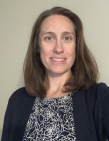
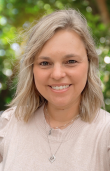
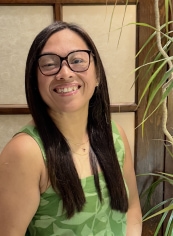
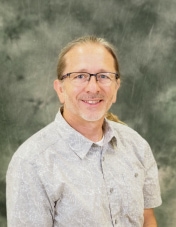
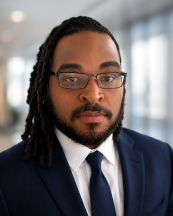
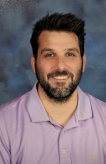
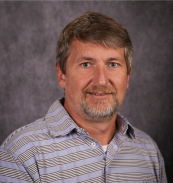
South Windsor High School, South Windsor, CT
Biography
I received a BS degree in biology from the University of New Hampshire, teaching certification and MA in biology from Central Connecticut State University, and MA in curriculum and
instruction from the University of St. Joseph. During my twenty-seven years as an educator, I have worked with students from diverse backgrounds at East Hartford High School and South Windsor
High School, where I currently teach general and AP biology.
During my career, I have developed and implemented NGSS curricula in my school districts as well as contributed to the book: Model-Based Inquiry for Biology. I worked with the UCONN Mentor
Teacher Collaborative to contribute to the development of a STEM teaching tool. I was a part of a professional learning community focused on justice-centered science teaching that developed
resources for implementing justice-centered work in the classroom. Additionally I authored a chapter about creating brave spaces in the classroom in the book: JuST Teach: Ambitious and
Community-Centered Science Teaching.
Personal Statment
I strive to create a classroom where all student voices are heard and valued. In my classroom, students work together to ask questions and discover meaning. This leads them to gain a deeper understanding of science concepts rather than rote knowledge. I believe it is important to help students make connections between their lives and the world around them, which helps them to become informed citizens who are capable of contributing to society. I hope students leave my classroom not only with science knowledge, but also with empathy, kindness, and the ability to work with others towards a common goal.
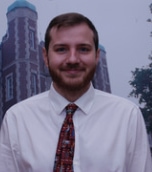
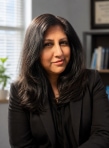
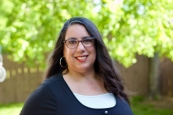
East Boston High School, Boston, MA
Biography
Hailing from Connecticut, I completed my undergraduate studies at the University of Connecticut, where I earned a Bachelor of Science in molecular and cell biology. My journey then led me to Boston to pursue a Master of Education in Secondary Science Education at Lesley University. Following my graduate work, I dedicated two years to teaching biology at Chelsea High School before transitioning to East Boston High School. Throughout my nine-year tenure at East Boston, I have had the privilege of teaching a diverse array of courses, including biotechnology, chemistry, and both standard and AP biology. Beyond the classroom, I serve on our instructional leadership team, where I help facilitate professional development for my colleagues, and I lead a mentorship initiative that brings high schoolers into local elementary schools to deliver engaging science and engineering workshops. My dedication to this field has been recognized through awards from the City of Boston, Mass Insight, and the Amgen Biotechnology Experience for excellence in AP biology and biotechnology instruction.
Personal Statment
One of my favorite things about teaching science—and what keeps me coming back each day striving to become a better educator—is the moment a student, in the middle of a lab, activity, or modeling exercise, pauses and says, "Hey, this is actually pretty cool."
I think science is incredibly cool, and I believe one of my most important roles as a teacher is helping students discover that for themselves. I want them to see that science is not only fascinating and enjoyable, but also a powerful tool for making the world a better place.
I encourage my students to understand that new discoveries and scientific breakthroughs are most meaningful when they improve the lives of others. I hope that by fostering both curiosity and compassion, I can inspire the next generation of scientists to approach their work with passion, empathy, and a commitment to making a positive difference in their communities and the world.
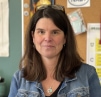
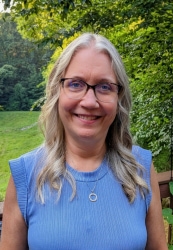
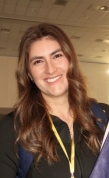
Wheeler School, Providence, RI
Biography
After completing my PhD in Molecular Biology, Cell Biology, and Biochemistry at Brown University, I spent several years teaching adjunct positions at different colleges and universities in Rhode Island and around the Boston area. In 2007, I took a part-time job teaching two sections of Environmental Science at the Wheeler School. This will be my 20th year at the Wheeler School, and I have spent 19 of those years as the Upper School Biology teacher. 16 years ago, I began teaching a one-semester elective of Molecular Biology. This course has grown into a year-long course with two full sections. I am also a Class Dean and faculty advisor to the Biomedical Club. In the summers of 2023 and 2026, I also led two student trips, introducing 69 students to the Galápagos Islands.
Personal Statement
In 2024, together with my colleagues in the upper school science department, we decided to put our department's mission statement in writing. We spent an afternoon carefully crafting this
statement, which now hangs in all of the science classrooms. To me, each statement below directly reflects how I see my role as a teacher of Biology and Molecular Biology.
Wheeler Science Department Mission:
- Advance ethics, justice, and equity in social, health, environmental, and climate issues.
- Debunk unscientific ideas meant to mislead.
- Build scientific literacy through critical thinking and source evaluation.
- Empower inquiry, inspire questioning, and foster self-driven exploration.
- Engage in lab science through active practice.
- Cultivate core values: Curiosity, creativity, community, collaboration, communication, and citizenship.
With these core beliefs, I approach my classes each day while building relationships, connecting with students, and sharing my passion for the biological sciences. My goal is to help my
students feel comfortable both learning and doing science. While not everyone who passes through my classes will go on to study Biology or Molecular Biology, I want them to leave with the
confidence in their abilities to think critically about diverse topics, value the process over the outcome, work collaboratively with peers, and stay curious about the biological world.
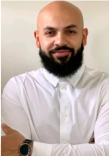
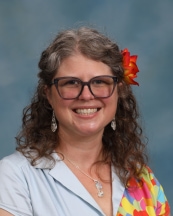
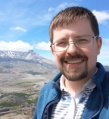
Science Park High School, Newark, NJ
Biography
I have been teaching for 16 years with a clear intention of inspiring students to seek knowledge, learn and apply skills, solve complex problems and love science. I started my journey at Rutgers University-Newark as a learning specialist for STEM courses. My job was to design a tutoring program to help students overcome barriers in those courses, primarily Biology and Chemistry. I noticed that many of my students were unprepared for college Biology and it was a subject that I enjoyed the most. This pushed to pursue a Masters in Biology and a Masters in Teaching. Right after, I started working at Science Park High School and I have been there since. My teaching load at the school includes College Preparatory Biology, AP Biology, AP Research, Biomedical Science, and Biochemistry. I am also the co-advisor of the Muslim Student Association, Engineering and Design Club, Chess club, and the Biology League. I like to play sports, read, travel, and spend time with my family outside of work.
Personal Statement
It is my belief that teaching is a human-centered practice. It is important for educators to embrace their humanity, which is needed to foster genuine and meaningful experiences within the classroom. It is something that students also need to see as younger humans. To me teaching is about the people in the learning environment more than the content itself. I enjoy Biology and I tell myself that my students need to enjoy it just as much or more. Therefore, I curate my course with memorable learning experiences sprinkled with my personality. A major part of a memorable experience is DOING biology. This allows my students to authentically express themselves comfortably and confidently while being present as learning is happening. I teach my students with high rigor and that naturally leads into failure for many. I teach them to embrace it and see the word FAIL as the First Attempt In Learning. Likewise, this helps them develop grit and seek more growth opportunities. My goal for my students is to have this life-long love for Biology to the point that it becomes a second language to them.
Additionally, I believe that collaboration is essential to making dynamic programs across the school, district, state, nation, and world. Working together adds an important layer of support for teachers. It can help some find solutions that already exist, share resources, find fabulous PD opportunities, or work with other leading professionals and industry partners to design and push for meaningful change. My goal outside of the classroom is to help design excellent programs in Biology and support teachers across the nation.
Frontier Senior High School, Hamburg, NY
Biography
I teach AP Biology, AP Environmental Science, and Genetics at Frontier Senior High School near Buffalo, New York. I earned degrees in Biology, Science Education, Genetics, Genomics and Bioinformatics, and Learning and Teaching in Social Contexts, and my research focuses on improving scientific literacy through pedagogical changes in the high school classroom.
I love creating classrooms where students genuinely enjoy learning science. My classroom has developed somewhat of a “fun and over-the-top” reputation, built around hands-on labs, immersive activities, and experiences. In addition, I work with students in two science-based extracurriculars: the NASA HUNCH program, and our school’s Ecology Club. Watching multiple groups of students present their work at NASA's Johnson Space Center has been one of the greatest privileges of my career.
I also enjoy supporting fellow biology educators through professional development, curriculum development, and writing.
Personal Statement
As Phil Collins sings in Tarzan, "In learning you will teach, and in teaching you will learn." That lyric has become one of my favorite descriptions of teaching because it reminds me that the classroom is a place where both students and I grow together. Every year my students challenge me, inspire new ideas, and reinforce why I love teaching biology.
My goal is to create a classroom where students genuinely look forward to learning. Biology should be engaging, somewhat chaotic, collaborative, and memorable. Whether we're modeling molecular biology through cooking, exploring ecology through local environmental issues, or turning the classroom into a gameshow as we practice chi-square calculations through the Monty Hall Problem, I want students to experience science as something they actively do rather than simply memorize.
More importantly, I hope students leave my classroom curious, confident, and equipped to think like scientists. And I hope they look back fondly and remember it being fun.
Collegium Charter School, Exton, PA
Biography
Dee Gallion is a secondary science educator, department leader, and advocate for engaging, accessible science education. With a passion for biology, environmental science, and project-based learning, Dee designs authentic experiences that connect science to real-world challenges while encouraging students to think like scientists. As an AP Biology Project-Based Learning Development Committee member and AP Environmental Science PBL consultant, Dee has collaborated with educators beyond the classroom to expand meaningful, student-centered learning opportunities. Dee is particularly passionate about using scientifically accurate visual art, models, and representations to make complex biological concepts accessible and engaging for all learners, including English learners and students with learning differences. Currently pursuing a doctoral degree in curriculum leadership, Dee is exploring how professional learning can help secondary science teachers use scientifically accurate visual representations to improve access to rigorous science. Through teaching, curriculum leadership, professional learning, and collaboration, Dee works to cultivate curious, confident, and scientifically literate students.
Personal Statement
I believe every student is capable of engaging deeply with science when given meaningful opportunities to see, question, create, and apply their learning. My teaching centers on making complex biological ideas accessible through inquiry, project-based learning, and scientifically accurate visual representations. I strive to create classrooms where students are not simply learning biology, but using biology to understand the world around them and their place within it. My goal is to help every student see themselves as capable of doing science.
McDonogh School, Owings Mills, MD
Biography
I graduated from Duke University in 1981 with a Bachelor of Science degree in Botany and immediately began teaching at my alma mater, McDonogh School. After five years, I took a brief leave of absence to earn a Master of Science Degree in Botany at The Pennsylvania State University. Afterwards, I returned to McDonogh School for another forty years. During that time, I taught chemistry, environmental science, ecology, anatomy & physiology, and plant propagation, but my mainstay was all levels of biology.
For several summers, I worked for the Chesapeake Bay Foundation, managing a work crew and helping run educational field trips. During the school year, I escorted many science classes on trips to Chesapeake Bay Foundation education centers, including Fox Island, Meredith Creek, Bishop’s Head, Tangier Island, Smith Island, Clagett Farm, Baltimore Harbor, Annapolis Skipjack, and others.
In addition to teaching life sciences, I coached wrestling for thirty years, served as a faculty sponsor for Fellowship of Christians in Universities and Schools & Fellowship of Christian Athletes, and with another colleague, ran the school’s annual Cardboard Boat Race.
I was awarded the Wright Abbot Teaching Chair in 2020 and the Yearbook Dedication in 2024.
Personal Statement
HEAR, SEE, DO!
Connect lab work to classwork. Structure equals function. Perfect practice makes perfect! If you want to get good at something, you must do it over and over again. There is no such thing as a free lunch. If you want to dance, you got to pay the fiddler. Ask questions.
I believe that students learn best when they master essential vocabulary, see visual representations that depict the concepts studied, and do activities and labs that put the concepts to work and bring images to life. As Mark Twain’s “How to Harness a Horse” without using technical terms in, A Tramp Abroad, illustrates, a lack of vocabulary makes it more difficult to describe or comprehend a process. Nowhere is this truer than in the life sciences. Learning essential vocabulary makes class discussions more meaningful and understandable.
This approach requires practice, practice, practice (grit)! It demands that I answer the same questions repeatedly and that I invite students to schedule time to go over their tests one-on-one. Even kids that have trouble focusing, do better when one works directly with them. This takes time, of course, but the reward for teacher and student is worth it.
Once upon a time, the loudest and most extroverted students dominated my help time in the lab. The quiet students were not being well served. Then I started what I call, “The Help List” – a simple protocol that is what it sounds like. Students sign up for help on the whiteboard and I work my way down the list. If I make it through the list, we begin again with a new list. Students that were not reached go to the top of the list next time we meet.
Practices such as those outlined above build relationships which are at the core of what I value. Positive relationships and a growth mindset fuel effort and success. While hard work doesn’t guarantee success, a lack of effort takes away the opportunity for success. I respect and appreciate students’ grit and perseverance. I remind them that such a mindset and approach will, at least, give them the opportunity for success.
The best thing I can hear is that when a student returns from college for a visit, he or she tells me that he or she was well prepared for what came next.
North Farmington High School, Farmington Hills, MI
Biography
My love for biology began in my freshman year of high school, in a 9th grade honors biology class. That spark only grew in AP Biology, taught by a teacher who was also my gymnastics coach. But biology wasn't my only passion - I loved French, too. At Grand Valley State University, I majored in French with a minor in biology, and I began my career as a French teacher. Five years in, I made a pivot I never saw coming: I moved into teaching biology. It's a change I'm endlessly thankful for, one that lets me reach more students each year and work alongside incredible science colleagues. Today, I teach AP Biology and coach gymnastics in the very district where I grew up, a full-circle moment that reminds me how the paths we don't plan for can lead us exactly where we belong.
Personal Statement
In the past few years, I have begun focusing on teaching concept before content. While there is a lot of acquisition that takes place in the classroom, it is the meaning making that truly helps students learn. If you can give something meaning, the students will become more invested, and more excited and willing to learn. Understanding the concept before introducing the content gives meaning to the content, to the vocabulary and more abstract concepts of biology. When I started introducing lessons that focused on concept before content, and focused on student-centered learning, I saw students making connections and having fun with the learning. In turn, this made me have more fun with teaching.
Seneca East High School, Attica, OH
Biography
I am a biology teacher at Seneca East High School in Attica, Ohio, where I teach Biology, Anatomy & Physiology, AP Biology, Marine Science, and Forensic Science. I also serve as an adjunct instructor through Bowling Green State University, allowing students to earn college credit while in high school. I earned my Bachelor of Science in Education from Bowling Green State University and my Master of Science in Biological Sciences from Clemson University. I am honored to be the 2026 Ohio Outstanding Biology Teacher, an award presented by the National Association of Biology Teachers. My teaching philosophy centers on helping students make sense of biology through inquiry, real-world applications, and meaningful connections across concepts. I strive to create a classroom where curiosity is encouraged, scientific thinking is developed, and every student has opportunities to engage with authentic investigations and see biology as relevant to their everyday lives.
Personal Statement
I believe biology is best learned through curiosity, investigation, and making meaningful connections. Rather than viewing science as a collection of isolated facts, I want students to understand how biological concepts interact to explain the world around them. My classroom emphasizes inquiry, collaboration, and evidence-based reasoning through hands-on investigations, real-world phenomena, and opportunities for students to analyze data and construct their own explanations. I strive to create an inclusive learning environment where all students are challenged, supported, and encouraged to think like scientists. My goal is for students to leave my classroom not only with a strong foundation in biology, but also with the confidence and scientific literacy to ask questions, evaluate evidence, and make informed decisions throughout their lives.
Kohler High School, Kohler, WI
Biography
My journey towards becoming an educator was not by any means traditional. While coming from a science high school in the Philippines fortified my passion for math and science, it also sparked my penchant for arts and journalism. My Bachelor’s Degree was in Development Communication, where I majored in Science Communication and Educational Communication. I was trained to immerse in, communicate, and popularize research and science to make the scientific community accessible to the grassroots level.
A long-term tutoring gig a few years later gave me an epiphany that Biology education was a profession I fervently wanted to pursue. The two-way learning, student engagement, and scientific curiosity inspired me to go back to academia to get my Master’s degree in Education, with focus on Biology. Now, here I am, just wrapping up my 23rd year of joyfully educating future movers and thinkers, the last eight years of which I continue to teach at Kohler High School, offering the following courses: Biology (General, Honors, AP); Anatomy and Physiology; Biotechnology; and Medical Terminology. I also advise our local HOSA chapter and BioClub team, coach our Science Olympiad team, and collaborate with teachers within and outside our school district. Thus, my own exploration and learning continue.
Personal Statement
Teach with intention because every experience is a learning opportunity. This is a principle that I have lived by over the years, based on my own experiences as an educator and as an individual. I always strive to enthuse and guide my students to be architects of their own learning, all the while providing a safe space of belongingness, camaraderie and mutual respect.
Here’s the philosophy that drives my goals. Just like life itself, Biology is not always a clear path of knowledge. It also has provisions for struggles and celebrations. We need to deliberately embrace productive struggle as an engine of deeper learning. The moment of insight rarely depends on a perfect test score; it happens when students synthesize ideas and see their relevance. They learn to evaluate evidence, assess their process, confidently participate in conversations, and eventually, make informed decisions about health, our planet and life in general. Normalizing momentary failure and revision as necessary constants to learn should be part of our teaching practice. Equally important are the “eureka” moments that happen in our classroom when students get off the “struggle bus,” look beyond the ambiguity of Biology, and finally, when concepts click, recognize their potential. They should be encouraged to define their success not by GPAs alone but more so by their endurance and tenacity.
We have a responsibility to be paragons for our students. With our role as reflective educators comes the idea that there is something much bigger than ourselves that can drive our purpose. Hence, the long-term impact of learning and teaching Biology is societal: that is why we need to continue to explore and learn novel ideas, advancements in Biology and pedagogy because this profession necessitates the evolution of our own practice and understanding. And when we do this with authenticity, confidence and joy, it transcends our classroom and our students lean in.
Maplewood Richmond Heights High School, Maplewood, MO
Biography
My path to teaching was circuitous. After earning a B.S. in Biology from Truman State and a M.S. in Biology from Emporia State, I entered a research fellowship at the Mitrani Center for Desert Studies in Israel. In 1999, I returned to my alma mater, Helias High School to teach “1 year”. The “teaching bug” bit me. I’ve been in the classroom since. Experiences at Jefferson City High helped shape my teaching at Maplewood Richmond Heights. A second Master's from Washington University-St. Louis, afforded me a relationship with Wash. U's Institute for School Partnership and McKelvey School of Engineering. Creating active classrooms filled with engaging learning opportunities in AP Bio, APES, Anatomy, and Independent Science Research makes science approachable. I believe science isn’t just something you learn; it is something that you do. I am supported by my amazing wife, Gina, and my loving daughters Addison and Haley.
Personal Statement
My approach to teaching requires students to be active learners. I use a variety of hands-on activities that ensure students learn and understand the science content as well as develop critical thinking skills. To me, science is more than something we learn, it is something we do. It is imperative that our students develop the ability to analyze, collaborate, problem-solve, and apply their learning in meaningful ways. I try to model a growth mindset for my students. I reflect on my practice, seek opportunities to improve, and adapt my instruction to meet the changing needs of my students. Education requires flexibility, creativity, and a commitment to lifelong learning for both teachers and students. Education is about inspiring curiosity, building confidence, and delivering content. I try to create a welcoming environment for all my students. Each student enters my classroom with unique experiences, strengths, and perspectives. I believe effective teaching requires developing individual relationships with them. When students know that their teacher “has their back”, they are more willing to take risks, ask questions, and learn from their mistakes. It is my goal that students leave my class with a greater understanding of biology and a passion for learning. I hope to prepare them so that they can successfully tackle the environmental, engineering, and societal problems of the future. I hope, regardless of what future careers my students choose, that I have helped provide them with the skills needed to make the world a better place.
St Anthony Village High School, St Anthony, MN
Biography
I am a science educator and mentor with more than a decade of experience working with students across multiple educational institutions, first as a paraprofessional and now as a licensed
teacher at St. Anthony Village High School. Throughout my career, I have developed a reputation for maintaining high academic standards while creating classrooms where students feel
supported, challenged, and capable of success.
My teaching focuses on connecting rigorous science to the real world through relevant, student-centered instruction. In AP Biology, I redesigned the curriculum around healthcare, biomedical
science, and medicine, helping students connect course content to potential careers and their own lives. The redesigned course has achieved an AP exam pass rate of more than 80%. I also
developed an Anatomy & Physiology curriculum from the ground up, emphasizing scenario-based application, critical thinking, and scientific reasoning. At St. Anthony, I implemented a
phenomena-based science curriculum centered on guided inquiry, resulting in increased MCA test scores during its first year of implementation.
While academic achievement matters deeply to me, I believe education extends beyond content. Teaching is my profession, but mentorship is my calling. I am particularly passionate about
helping students who may not immediately see themselves represented in STEM or healthcare find their confidence, voice, and path forward.
Personal Statement
Teaching has always been about more than delivering content for me. I want my classroom to be a place where students discover not only what they can learn, but what they are capable of
becoming. I set high expectations because I believe students deserve to be challenged—and because I am committed to standing beside them as they meet those challenges.
Mentorship is at the heart of my work. I especially want to support students who have historically been underrepresented in STEM and healthcare, including students of color, first-generation
college students, and students who may not yet see themselves as belonging in these spaces. I want to be the teacher who helps them find their voice, build confidence, and recognize
possibilities they may not have considered.
The most meaningful messages I receive are from former students who tell me that my classroom helped them develop resilience, accountability, curiosity, or a passion for science. Those
relationships remind me that the impact of teaching extends far beyond a single school year. I hope to continue being that foundation for students as they build their futures.
Baldwin High School, Baldwin City, KS
Biography
I am a science teacher and STEM coach with 20 years of experience teaching in Kansas school districts. As a past president of the Kansas Association of Biology Teachers, I always enjoyed serving on our OBTA committee, and am so honored to be considered for this award.
I have been motivated by many past Kansas OBTA recipients, including Eric Kessler (2009) who, as my high school teacher, was my inspiration to pursue science education and my passion to provide my students with the most relevant, authentic research experiences possible. A recent highlight was the fall 2025 publication of my AP Biology students’ class research project “Phytoplankton abundance and methane emissions are minimally impacted by environmentally-relevant glyphosate concentrations in small-scale outdoor mesocosms” in the journal Water Research.
In addition to introductory biology, I have also taught AP and dual-enrollment College Biology, environmental science, microbiology, field ecology, and computer science courses. When I am not at school, I enjoy reading and spending time with my wife and daughter.
Personal Statement
In science, like so many things in life, the process of learning and experimentation is more important than the individual outcomes. I think it is important to provide my students with
chances to learn from every bump and twist and turn of the journey, building rich, interconnected schema where new information has a place to land and stick. To do this, I try to provide my
students with as many chances to work through the sensemaking process through laboratory activities, cooperative learning practices, and research opportunities.
In a time when people turn to social media or their preferred AI seeking the “right answer” to any question placed in front of them, I think it is even more important we, as
science teachers, train our students to slow down and dive into a problem. Our answers are seldom direct, straight-forward, or easy. But the sooner we can get our students to accept and
embrace the inherent struggle within the scientific process, the better we are preparing them for success in any future path they may pursue.
Hawthorne Academy of Health Sciences, Charlotte, NC
Biography
I am a national award-winning biology educator, recipient of the 2026 Robert E. Yager Exemplary Teaching Award, STEM Research Club founder, and researcher passionate about expanding equitable
access to authentic STEM learning. I also received the Toshiba America Foundation Grant, Burns & McDonnell STEM Grant, Science Coaches Grant, and Project EXPLORE Grant. I serve as a
Society for Science and Science Communication Lab Educator Ambassador, an AP Biology Reader for the College Board, and a Biology EOC Content Writer for the North Carolina Department of Public
Instruction. I also serve as a Regeneron International Science and Engineering Fair (ISEF) Grand Award Judge and have judged several regional, national, and international STEM competitions.
My professional growth has been shaped by experiences as a North Carolina Science Leadership Fellow, IDEA Learners Fellow, NIEHS STaRS Research Fellow, and NC Energy Literacy Fellow. My
research and publications focus on innovative biology education, artificial intelligence in STEM learning, and nanobiotechnology, with articles published in The Journal of Chemical Education,
The American Biology Teacher, and ASBMB Today.
Personal Statement
My mission is to inspire curiosity, critical thinking, and scientific discovery by connecting classroom learning with real-world research experiences.
Nation Ford High School, Fort Mill, SC
Biography
I just completed my 30th year in the classroom. I graduated from Mercyhurst University with a degree in Biology and Secondary Education in 1991. I then began my teaching career at Holy Family School in Erie, PA, teaching 6-8th grade Science and then at Cathedral Preparatory School where I taught Freshman Integrated Science. We relocated to Nebraska in 2004 and I taught Biology and Human Physiology at Millard South High School in Omaha. While there, I started a HOSA chapter and was recognized as the NE HOSA Advisor of the year. I also earned my M.Ed in Curriculum and Instruction at Peru State College in NE. We relocated again in 2012 to SC. I’ve taught all levels of Biology at Nation Ford High School in Fort Mill for the past 13 years and I score AP essays for the College Board in the summer. When I am not teaching, I enjoy spending time with family and friends, especially my husband, Mike.
Personal Statement
I work really hard from day one every year to foster a learning environment where my students feel valued and safe. I set high expectations for my students because I believe all students can learn. My classroom has a lot of structure and routine built in, so my students can feel comfortable.
I will always challenge my students to apply what we are learning in class and to think critically and solve problems. These are skills that carry over into any aspect of life.
Biology should be a hands-on class. I am passionate about my students doing engaging activities that involve them directly in their own learning. We do as many “wet” labs and “inquiry” labs as possible, so my students “do” science instead of just hearing about it.
Athens Academy, Athens, GA
Biography
I am a member of the Upper School faculty at Athens Academy, a K3–12 independent school in Athens, Georgia, where I teach Honors Biology, AP Biology, and Honors Evolutionary Genetics. I earned a B.S. in Biology from Furman University and an M.S. in Biochemistry and Molecular Biology from the University of Georgia. Before entering secondary education, I worked as a research scientist in cellular and molecular genetics laboratories at the Mayo Clinic and the University of Georgia and taught undergraduate and graduate students through my research program at UGA. I have served as an AP Biology Reader since 2021 and was promoted to Table Leader in 2025. In 2026, I was awarded the Walton EMC School Empowerment Grant to expand biotechnology research experiences and strengthen K3–12 STEM education at Athens Academy. Beyond the classroom, I mentor student researchers through our Capstone Program, sponsor the National Honor Society, and support student service organizations.
Personal Statment
Science is fundamentally a way of making sense of the world. As a biology teacher, my goal is not simply to teach students biological facts and concepts, but to help them develop the curiosity, critical thinking skills, and scientific literacy necessary to understand the world around them and engage thoughtfully with it.
My own journey into science was shaped by exceptional teachers who inspired me to ask questions and seek answers. Those experiences continue to influence my teaching philosophy today. I believe students learn biology best when they actively participate in the process of science rather than passively receive information. For that reason, my classroom is built around inquiry, problem-solving, discussion, and authentic investigation. Students are encouraged to ask questions, analyze evidence, construct explanations, and revise their thinking as new information emerges.
My background as a research scientist in cellular and molecular genetics has profoundly shaped my approach to teaching. Having spent years conducting scientific research, I understand that science is rarely a straightforward path to an answer. Instead, it is a process of exploration, collaboration, and persistence. I strive to bring that authentic experience into my classroom through hands-on laboratory investigations, biotechnology experiences, data analysis, and research opportunities that allow students to think and work as scientists.
At the heart of my teaching is the belief that every student is capable of scientific thinking. Many students enter biology classrooms believing that science is only for a select few. I work intentionally to create an environment where students feel comfortable taking intellectual risks, asking questions, and learning from mistakes. When students begin to see themselves as capable investigators, they gain confidence not only in science but also in their ability to solve problems and make evidence-based decisions.
I also believe biology education carries an important responsibility beyond the classroom. Scientific literacy is essential for informed citizenship in a world increasingly shaped by advances in biotechnology, medicine, environmental science, and public health. Whether my students pursue careers in science or not, I want them to leave my classroom equipped to evaluate information critically, engage thoughtfully with scientific issues, and appreciate the role science plays in their lives and communities.
Ultimately, I hope my students leave my classroom with more than knowledge of biology. I hope they leave with a sense of curiosity, a commitment to evidence-based thinking, and the confidence to continue asking questions about the world around them. If they do, then I have succeeded not only as a biology teacher, but as an educator.
Southside High School, Gadsden, AL
Biography
I have been in education for over 25 years. I initially started in a school program for at risk youth. After a number of years, I recognized that all of our at-risk youth were coming from the public schools into our program. I decided that I wanted to be on the front side of a student's educational and behavioral risks rather than the back side. This decision led me to become a General Science teacher. The majority of my classroom career has been spent teaching Biology and AP Biology. I also sponsor our school's First Priority and Science clubs. I am thankful to be in a school with great students that are willing to engage in the process of accepting the challenges of rigorous learning.
Personal Statement
I believe that I have many roles as a biology teacher both in and out of the classroom setting. In the classroom, it is important that I equip students to recognize and apply course content to their daily interactions. My hope is that they will engage, in their own way of becoming better stewards. We can teach our kids how to answer the question on a test, or we can show them how to become citizens of a biological world. I have full confidence that my students will become policy makers, engineers, health care professionals, gardeners, family members and community leaders. I believe that biology teachers have the greatest opportunity to help students see how to become global thinkers, and ultimately global citizens.
Highland Park Highschool, Dallas, TX
Biography
I began teaching in Springfield, Missouri in 2001, where I taught chemistry and integrated science. I moved to Austin, TX, in 2004 and taught at Austin High School until 2018. I taught all levels of biology, anatomy and physiology, and a research course. Towards the end of my time at Austin HS, I was the department chair and instructional coach. I have just completed my seventh year at Highland Park HS, where I teach AP Biology. I am also entering my second year as an endorsed College Board consultant. I truly love being in the classroom, but I also love helping other teachers tackle the beast known as AP Biology!
Personal Statement
Since I was a young girl, I have always explored my world, collecting specimens and asking all the questions. I could not imagine my life without some kind of science in it, so I decided to
become a high school biology teacher. I cannot find a topic in biology that I don’t get excited to talk about with a huge smile on my face. I want to share my enthusiasm and love for
biology with young growing minds. I want to teach students to think about their world critically and learn how to ask educated questions that might even lead to testing those questions.
Students must be taught to be responsible information consumers, especially about their natural world.
I want my students to be able to think critically about the information they are consuming and to be able to talk or write about the information they are learning using academic vocabulary.
To help foster this, they need to be presented with multiple opportunities to use this skill. They need to be able to look at a graph and critically analyze the information to conclude what
they are seeing. They need to be able to read academic literature and be able to pull the content from it and organize it in a meaningful way, but I must model this for them and then allow
them to do it by themselves.
Part of teaching is also building relationships with students, families, and colleagues. Having open communication can foster relationships with all parties mentioned above. I believe it is
important that the students see their teachers as being human with the same tendencies and stressors they might also see in their lives. I look at challenges that happen during the school
year in my personal life, whether it is me or my family getting sick or having car issues, as an opportunity to show students how to handle stressors healthily. When students are struggling
academically, I reach out to the parents, and even their assistant principal and/or counselor, and approach the situation with a team mentality. I want to work with all parties to help
students be successful in whatever it is they are trying to achieve.
Fostering positive relationships with colleagues is also an important part of being a teacher, whether part of a teaching team or a department. I also have an open-door policy about
communication with the people I work with. I check on my team teachers every day, and I let them know what is going on in my life as well. Additionally, the team of teachers that I work with
plan our lessons and units together. We know each other’s strengths and can accomplish tasks efficiently to ensure our lessons cover the state standards and learning objectives we have
laid out. We also reflect together to evaluate our lessons and assessments to ensure our teaching is effective and the students are meeting the learning goals for a lesson or unit. No one can
do this profession by themselves. We all get better by having each other in our lives to work through problems and situations to achieve our goals in the classroom.
Flowing Wells High School, Tucson, AZ
Biography
I am a biochemistry teacher at Flowing Wells High School (FWHS) in Tucson, Arizona. My educational background is in Ecology and Evolutionary Biology, and I focused on marine intertidal zones. I have worked at FWHS for four years, where I have developed our Biochemistry curriculum to integrate local phenomena wherever possible. Alongside my colleagues, we have created a program that teaches our students hands-on skills while investigating the natural phenomena that drive life in the desert. I have taken on several opportunities for additional learning, most notably the BIORETS Santa Cruz River program and the Bioengineering & Sustainability Workshop at the University of Arizona. My learning in these courses has allowed me to develop new curriculum combining biotechnology and biodiversity. I have presented my work at the National Association of Science Teachers and look forward to future opportunities to share my work!
Personal Statement
I am a fifth year teacher working out of Tucson, Arizona. I have been teaching Biochemistry at Flowing Wells High School since I started teaching. My career at Flowing Wells has allowed me the opportunity to develop curriculum and design new lab experiences for my students. My background in ecology has also encouraged me to incorporate field research into our curriculum. My teaching philosophy and goals focus largely on the community I am currently serving. I work in a small school district with a very diverse student population. Students show varying levels of interest in science, and my teaching philosophy aims to meet these varying levels of interest. Therefore, my two biggest goals as a teacher are to provide students with the hands-on skills necessary to enter the field of biology and to increase scientific literacy amongst all my students.
Washougal High School, Washougal, WA
Biography
William Baur is a high school biology teacher, curriculum writer, and educational leader committed to helping students use science to improve their lives and the world around them. He teaches biology at Washougal High School, where his classroom centers on inquiry, collaboration, and solving authentic problems that connect biology to students' everyday experiences.
Beyond the classroom, William develops hands-on STEM curriculum for Class CrunchLabs and has written science curriculum for the Washington Office of Superintendent of Public Instruction, EarthGen, IslandWood, OpenSciEd, and other organizations. He also facilitates professional learning for science educators across the country, supporting the implementation of high-quality, student-centered science instruction.
In 2025, William was honored as a Washington State finalist for the Presidential Awards for Excellence in Mathematics and Science Teaching (PAEMST), recognizing his commitment to innovative and impactful biology instruction. He also serves as President of the Washington Science Teachers Association, where he works to expand access to high-quality science education and professional learning opportunities for educators across the state.
Whether teaching students, writing curriculum, or supporting fellow educators, William believes biology education should empower learners to ask meaningful questions, think critically, and use scientific understanding to improve the health of people and the environment.
Personal Statement
Everything I do as a biology teacher is grounded in two essential questions: 1) How can we help our friends, family, and ourselves live healthier lives? and 2) How can we better take care of the environment for all living things? These questions give purpose to every unit and help students see biology as a tool for understanding and improving the world around them.
My classroom is built on inquiry, collaboration, and scientific sensemaking. Students investigate authentic phenomena, ask their own questions, analyze evidence, and work together to develop explanations. Rather than memorizing isolated facts, they apply biological concepts to meaningful challenges, from redesigning healthier school lunches to exploring the impacts of human activity on ecosystems. My goal is for students to leave my classroom with more than a strong understanding of biology—they should have the confidence and skills to use scientific thinking to make informed decisions, solve real-world problems, and contribute positively to their communities and the environment.
North Tahoe High School, Tahoe City, CA
Biography
I joined the staff at North Tahoe High School in 2016 after previously studying botany at the University of Vermont, and earning a P.h.D. in molecular and cell biology at the University of California, Berkeley. On a daily basis, I am filled with wonder and curiosity about the amazing complexities of the natural world. My favorite role as a scientist is teaching others how to use science as a way to explain the beauty of the natural world and to answer questions that are interesting to them. In my biology and AP biology classes, students use real scientific data to explain discordant events or resolve paradoxes to gain a better understanding of the underlying principles and rules that govern the universe.
Personal Statement
"We, curiously observe, carefully analyze, and clearly communicate” to explain science data in service of better understanding the natural world.
This mission statement encompasses how I think about teaching, learning, and doing science. I attempt to organize my instruction this way because learning science happens best by doing science. With that goal in mind, I aim to present unexplained phenomena and real data from nature to my students on a daily basis. I ask them to use their science skills (ex. NGSS science practices) to analyze these phenomena and draw conclusions about what they have observed. Finally, we communicate what we have learned to each other or a variety of other audiences, because clearly communicating what you learned forces you to clarify your own understanding.
At its most basic level the process of doing science is: make an observation, analyze the data you collected, and communicate what you found to a broader audience. I believe doing science is also the best way to become invested in science while learning scientific concepts and practices at the same time.



The National Association of Biology Teachers empowers educators to provide the best possible biology and life science education for all students.
NABT, P.O. Box 335, Heber City, UT 84032
office@nabt.org | Fax: (202) 962-3939
(888) 501-NABT or (703) 264-9696
Thank you for visiting the NABT website.
Our privacy policy is found here.
Announcements for products or services on this website do not imply endorsement of or by NABT.
Website by Morweb.org
Copyright National Association of Biology Teachers