- About
- Membership
- Resources
- Awards
- Events
- Get Involved

E
We congratulate the 2026 NABT Teaching Award Recipients and are honored to recognize their achievements.
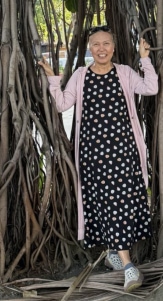
Justice High School, Falls Church, VA
Biography
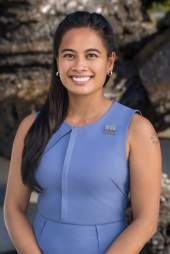
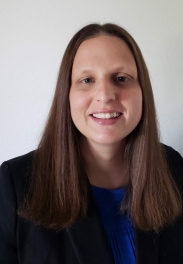
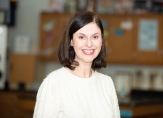
Kirsten has been teaching science for Multilingual Learners (MLs) for nine years. As a first-generation Filipino American, she strives to emphasize the importance of diverse perspectives and
backgrounds in science. Her classes are a unique mixture of scientific content and English language development, and she has created much of the ML Environmental Science and ML Biology
Curriculum that many teachers in Fairfax County Public Schools use today. As the current Science for All Chair for the Virginia Association of Science Teachers and the High School Division
Chair for the National Science Teachers Association, Kirsten uses her expertise to connect educators not only across Virginia, but across the country!
Kirsten is passionate about accessibility and experimentation. As a 2019-2020 Fulbright Scholar, she utilizes her experiences teaching English at Universidad Nacional in Bogota, Colombia, to
create and implement content that is accessible and rigorous. As the recipient of multiple grants for her students, she implemented “Hydroponics in Action!”, solidifying concepts
learned within her classes and bringing science to life, as students created their own models of photosynthesis while participating in Project-Based Learning. Her focus on experiential
learning has allowed students to transition from mainly vocabulary-dense memorization to independent researchers, regardless of their language level, and has earned her the 2024 NSTA Robert
E. Yager Exemplary Teaching Award, 2025 Finalist for the Presidential Award for Excellence in Mathematics and Science Teaching, and 2026 Einstein Fellow with the Library of Congress.
Personal Statement
My journey in education is rooted in a deep commitment to systemic equity and accessible science instruction. As a high school Environmental Science teacher in Northern Virginia, I
bring a unique, interdisciplinary perspective to the classroom, backed by a Master’s degree in Bilingual Education. This diverse academic foundation allows me to view science education
through a multifaceted lens of policy, culture, and literacy. Over my career, which includes invaluable hands-on experience working in special education classrooms and serving as an
international Fulbright teacher scholar, I have focused heavily on developing targeted content integration strategies for secondary Multilingual Learners. These experiences have underscored
the profound impact that inclusive pedagogy can have on students who are traditionally marginalized within STEM disciplines.
Building on this foundation, my primary goal in teaching biology and life science is to dismantle the systemic barriers that prevent Multilingual Learners and diverse student populations from
fully engaging with scientific inquiry. By pursuing a PhD in Science Education, I aim to merge my practical classroom expertise with rigorous academic research. My long-term professional
goals involve collaborating with systemic organizations—such as the National Science Foundation and state departments of education—to design curricula that treat language
development and scientific literacy as interconnected goals. Ultimately, I intend to transition into higher education to train the next generation of educators, equipping them with the
leadership and pedagogical tools necessary to make life science genuinely accessible, culturally responsive, and equitable for all students.
Sponsored by NCSE
Clarke Central High School, Athens, GA
Biography
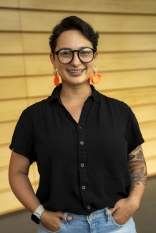
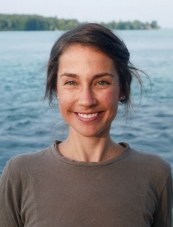
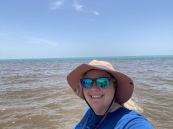
Enya Granados is in her 9th year of teaching high school life science currently in Athens, Georgia. She is particularly passionate about bringing high quality teaching and learning
experiences to multilingual learners and students with disabilities/exceptionalities. This includes group projects, the centering of local phenomena, field trips, and hands-on labs. Enya
loves to collaborate with colleagues within and outside of her school to cultivate her teaching.
In addition to teaching, she likes to write curriculum, collaborate in research, and facilitate professional development. This includes collaborating with BSCS Science Learning on their Clim8
Pathways curriculum, co-authoring in Corwin’s 5 to Thrive series “Answers to Your Biggest Questions About Teaching Secondary Science”, and serving as a co-facilitator for
the Knowles Teacher Initiative’s “Effective Groupwork” course. Enya is excited about growing in her professional development skills as she reflects with her fellow HHMI
BioInteractive Academy members.
She is grateful to the NABT, Knowles, and HHMI Ambassador community and her amazing mentors for their continued support and learning opportunities they have offered her.
In her free time she enjoys knitting, doing aerial acrobatics, and cuddling with her chihuahuas.
Personal Statement
My goals in climate education and outreach are to make climate science more accessible to everyone. The learning experience should be empowering for students and community members to take local actions for a more hopeful future where we all collaborate together.
Central Campus, Des Moines, IA
Biography
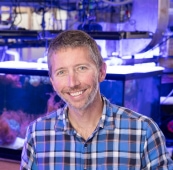
Dr. Gregory Jeff Barord is a marine biologist and educator who was fascinated by cephalopods at an early age. Dr. Barord received his B.S. in Marine Biology from Texas A&M University at Galveston and completed his M.Phil. and Ph.D. at City University of New York – Graduate Center. Currently, he is the Marine Biology Instructor at Central Campus, a Conservation Biologist for the Save the Nautilus, and holds a Research Associate affiliation at the American Museum of Natural History. In the classroom, he emphasizes the connection between scientific understanding and environmental stewardship, encouraging students to apply critical thinking to real-world ecological challenges. Much of Dr. Barord’s research has taken him throughout the Indo-Pacific, conducting deep sea surveys of nautilus populations and their habitat leading to positive conservation outcomes. These experiences have shaped his perspective on science, so much so, that now he brings dozens of his current high school students on field research expeditions to Fiji. Dr. Barord serves in several leadership roles, including as an Instructional Leadership Team Member at his school, as a Scientific Adviser for the Association of Zoos and Aquariums Aquatic Invertebrate Taxon Advisory Group, and on the international level as a Writing Team Member for the recent United Nations World Ocean Assessment. Outside of formal research and teaching, he is dedicated to sharing science with broader audiences. Whether through public talks, collaborations, or outreach efforts, he strives to make marine biology accessible and inspiring for everyone.
Personal Statement
While the foundations of science are vital, I challenge each of my students to bring their own personalities and interests to marine biology topics and dialogue in our classroom. When discussing current and future environmental problems, we are only going to come up with effective solutions if they are driven by diverse stakeholders sharing unique ideas. I prioritize connecting critical thought to curiosity, so they develop the ability to analyze complex biological systems and conservation issues from different perspectives. By combining engagement, inquiry, and conservation-focused learning, my students are prepared for multiple career paths, whether in the sciences or not, as well as becoming informed and collaborative citizens.
Vermilion Parish School System, Abbeville, LA
Biography
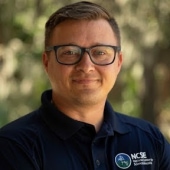
Blake Touchet is an educator, researcher, and national leader in science education whose work has advanced evolution education in K–12 classrooms across the United States. A former high school biology teacher in Louisiana, Touchet spent more than a decade teaching science while developing innovative approaches to helping students understand evolution as the unifying framework of biology. His classroom instruction emphasized connecting evolutionary concepts to real-world issues, including human health, biodiversity, genetics, and scientific literacy.
Touchet expanded his impact beyond the classroom through leadership roles with the National Center for Science Education (NCSE), where he served as Science Education Specialist. In this position, he worked directly with teachers nationwide, providing professional development, curriculum resources, and instructional support designed to strengthen evolution and climate change education. He also collaborated with educators through the Teacher Institute for Evolutionary Science and NCSE’s Teacher Ambassador programs, helping teachers confidently address challenging scientific topics in diverse communities.
A respected communicator of science, Touchet has addressed common misconceptions about evolution through workshops, publications, conference presentations, and podcast appearances. His work has focused on helping educators explain the nature of scientific theories, counter misinformation, and engage students in evidence-based reasoning. He has also contributed to the development of instructional materials that use storytelling, scientific literacy, and culturally responsive teaching practices to improve student understanding of evolution.
Through his teaching, scholarship, and national outreach efforts, Blake Touchet has become a prominent advocate for effective evolution education and scientific literacy, empowering both educators and students to engage thoughtfully with the evidence that explains the diversity and interconnectedness of life on Earth.
Personal Statement
My goal as a biology teacher is to help students appreciate the world through the lens of scientific inquiry. I believe that developing scientific literacy so that people can evaluate claims, interpret evidence, and make informed decisions for themselves and their communities is the most critical work that we do as science educators.
Sponsored by NABT
Moberly Area Community College, Columbia, MO
Biography
Lindsay Reustle is a Professor of Biology at Moberly Area Community College (MACC), where she has taught since 2018. She teaches biology courses ranging from introductory biology to Genetics,
Microbiology, Anatomy, and Physiology. She particularly values the opportunity to build meaningful relationships with students and to help them recognize their potential to succeed in
science.
Professor Reustle earned an associate degree from Ozarks Technical Community College, a bachelor’s degree in Biology from Missouri State University, and a
master’s degree in Biological Sciences from the University of Missouri. Before transitioning to teaching, she conducted research in developmental biology and genetics at Missouri State
University, the University of Missouri, and the University of Kansas Medical Center.
Throughout her teaching career, Professor Reustle has focused on creating inclusive, student-centered learning environments and increasing access to STEM education.
Her work includes supporting first-generation students, developing inclusive biology curriculum, mentoring students in research, and leading college-wide initiatives that promote belonging
and equity. She is passionate about helping students see biology as both a rigorous scientific discipline and a field in which they belong.
Personal Statement
I have taught biology at the community college level since 2015 working with students ranging from those taking their first biology course to students preparing for careers in the health
sciences and other STEM fields. Across these courses, I strive to create learning environments where students feel supported, challenged, and capable of succeeding in science. I emphasize
active learning, meaningful connections between biological concepts and students’ lives, and opportunities for students to develop scientific reasoning rather than simply memorize
information.
My goal as a biology educator is to help students see themselves as capable participants in science and to recognize the relevance of biology to their lives and
communities. I want to continue developing inclusive, student-centered approaches that make rigorous biology education accessible to students with diverse backgrounds, experiences, and
learning needs. I also hope to help students develop the confidence, curiosity, and scientific literacy they need to evaluate biological information and make informed decisions. Ultimately, I
want my students to leave my courses not only with a stronger understanding of biology, but with a greater sense that they belong in science.
Vanderbilt University, Nashville, TN
Biography
Across several recent NSF-funded projects, Dr. Ballen and her collaborators examine how representations of scientists influence students’ engagement and how these insights can be used to design learning environments that help students envision themselves as participants in science. Her work has contributed to actionable classroom resources, including Data Nuggets/DataVersify, free activities that support data literacy and bring authentic scientific data into biology classrooms. Dr. Ballen’s research group is highly collaborative and multidisciplinary, bringing together learning scientists, psychologists, data scientists, and disciplinary faculty across science fields and institution types. These collaborations enable the development of tools and ideas that address questions that could not be answered from within a single classroom, institution, or discipline.
Arizona State University, Tempe, AZ
Biography
Sara Brownell is a President’s Professor in the School of Life Sciences at Arizona State University where she directs the Research for Inclusive STEM Education (RISE) Center. Sara’s research as a discipline-based education researcher has aimed to make undergraduate science learning environments, particularly large-enrollment courses and research experiences, more inclusive. Her research has focused on the experiences of students with concealable stigmatized identities such as religious students, students with mental health struggles, LGBTQ+ students, and students with disabilities. As a teacher scholar, she often uses her own large-enrollment classroom as a space to come up with teaching ideas and pilot new interventions. Her research in biology education has been internationally recognized and featured in Science Magazine, as well as in numerous news outlets, including the NY Times, CNN, and Scientific American. She is a Fellow of the American Association for the Advancement of Science (AAAS), a recipient of the LGBTQ+ Educator of the Year by the National Organization of Gay and Lesbian Scientists and Technical Professionals, and a big fan of shih tzus.
Personal Statement
My goal as an instructor is to build a supportive and relationship-rich classroom environment that is evidence-based yet responsive to emerging student needs. And to do this at scale. I teach a 300-person physiology course that is a genuinely dynamic classroom in which instructional decisions are shaped by frequent student input. I want students to feel like they matter and in turn, their feedback helps me more effectively teach them.
Cold Spring Harbour Labratory, New York City, NY
Biography
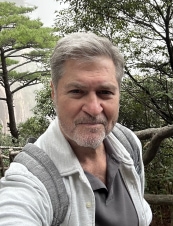
I founded the DNALC in 1988 as the world’s first science center devoted to public genetics education. The DNALC has since grown to five sites in the New York Metropolitan area, encompassing 45,000 square feet, 16 teaching labs, and four bioinformatics labs. Nineteen additional programs at universities and scientific institutions worldwide have been licensed by or modeled after the DNALC. My career has focused on scaling up lab and computer infrastructure to allow large numbers of students and citizen scientists to inquire about the genetic basis of life. More than 500,000 US students per year use DNALC, curricula, experiments, and extended research projects. The DNALC first implemented footlocker kits and mobile labs to cost-effectively carry DNA experiments around the world and developed the first student experiment in personal DNA sequencing. The DNALC’s methods for DNA barcoding and its DNA Subway 2.0 bioinformatics workflow form one of the most widley used systems for undergraduate student research and citizen science studies of biodiversity. Under an MOU with Oxford Nanopore Technologies, the DNALC is popularizing its inexpensive MinION DNA sequencer, which together with DNA Subway 2.0 fulfills the promise of DNA sequence analysis anytime, anyplace, by anyone.
Personal Statement
I began my teaching career as a Peace Corps volunteer, teaching biology in a public boarding school at the edge of the Kalahari Desert in Botswana. Working with students who struggled to learn abstract science in a second language impressed upon me the importance of hand-on learning. Ten years later, when I shifted into molecular biology, I realized that everyone struggled to learn in the language of DNA. So, I set about to structure a simple set of experiments that would allow students to get their hands dirty with building a recombinant DNA molecule. I have stuck to that principle throughout my career. I felt vindicated when a careful study of students at UT Texas showed that those who completed a research project were more likely to finish college on time. This told me that being responsible to an experiment is part of a constellation of behaviors that actually make a person a better learner.
Eastern Connecticut State University, Willimantic, CT
Biography
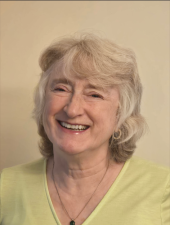
Liz joined NABT long ago and found her people. Her first role was book review editor for the American Biology Teacher. She became a director-at-large and was elected President for 2018. Liz
is on the nominating committee and she reviews conference proposals.
Liz grew up in northern New Jersey (native) and New York state. She earned a B.S in biology from The New York State College of Agriculture and Life Sciences at Cornell University. Liz worked
at the Eastman Dental Center (University of Rochester) before commencing her graduate studies at Michigan State University. She completed her Ph.D. in biochemistry in 1990. Liz and her family
headed west to the University of California, Riverside where she did postdoctoral research in entomology. The family returned to the east coast; Liz had a second postdoc in orthopaedic
research at the University of Connecticut Health Center. Liz continued her academic career at Eastern Connecticut State University in Department of Biology where teaches introductory biology,
cell biology, biochemistry, and entomology. Her primary research interests include insect-based toxicology, astrobiology, and protein characterization. Liz had sabbatical leave at Rutgers
University/Cook College where she investigated entomopathogenic nematodes as part of USDA grant. She and four Eastern colleagues had a five-year S-STEM grant in mathematics and biology which
just ended.
She is an AP Biology consultant and reader/leader for the AP examination; she is a co-author of the AP Biology Investigative Labs: An Inquiry-Based Approach teacher and student manuals. Liz
presents workshops throughout the country.
Personal Statement
Education is not a spectator sport; this is true for both the teacher and the student. I never taught the same course twice. After each semester, I reflect on the course content and the experiences. I take student evaluations seriously and learn from them what I could improve or change. We all learn by doing and that tenet is central to good instruction. Whenever I design a course (or revamp one) I ask these questions:
1. What are the critical topics I want students to understand?
2. What are the implications of what I am teaching (e.g., the “take-home lessons”)?
3. I am providing a supportive and inclusive learning environment?
An example is the entomology course. Students make an insect collection, and I take them on several field trips during the early fall. While they need to find insects in different orders and
families, each specimen is labeled not only with the location, date, collector’s and the insect species name, the label includes the insect’s role within the ecosystem. Ecological
categories include wood borer, pollinator, or household pest. We compare insect collections from previous classes to analyze changes, such as the loss of an insect species or the appearance
of an invasive.
In the cell biology course, I introduce a new discovery at the beginning of class. One important lesson for all of us (students, faculty, and the public) is that the sciences
–especially biology—are not static and we are learning new things every day. Maintaining currency in literature is important for all scientists and is vital for students
considering graduate school and/or a research career.
In the biochemistry course, I query the class about specific interests and address them throughout the semester. One course requirement is a biochemical pathways chart in which the student
connects the seemingly disparate metabolic pathways into a cohesive whole. One alumnus told me he used his chart to study for his medical school exams and found it indispensable. Students
better understand how energy flows through a system and how carbon/nitrogen moves via various metabolites.
A course that we designed for our NSF grant cohort was science vs. pseudoscience. We felt it was imperative for students to understand what misinformation and disinformation are, how they can
be detected, and ways to avoid falling into those popular traps. We discuss examples such as incorrectly labeled pictures, the mistakes of connecting causation and correlation, and how
certain names, such as homeopathic medicine, hide the true nature of the pseudoscience. The final project is a group activity. Students design a website, marketing ploy, and other materials
regarding a fake (hoax) product, event, or place. An outstanding example was “Gas Gate” which was a ploy designed by the petroleum industry to keep people and their vehicles in
traffic jams.
My final thought—always ask yourself each morning “What can I learn today?” Teachers and their students must be active participants in education. Keep on reading, asking
questions, and mentoring our next generation of biologists.
Sponsored by NABT, BFW Publishers, and Donations
Lee College Huntsville Center, Huntsville, TX
Biography
Bella holds a bachelor’s degree in biology from the University of Santo Tomas, Manila, Philippines. She has been teaching biology in high school before she accepted a middle school science teaching job in Houston, Texas, U.S.A. The desire to continually hone her teaching skills, adapt to the new culture and learn innovative ways to spark curiosity among challenging students, motivated her to pursue master’s degree in Curriculum and Instruction. Shortly after her first master’s, she pursued her second master’s at Texas A&M University Galveston where she completed her Marine Resource Management degree. Her interest in marine biology deepened even more after she got certified to be an open water scuba diver most recently.
Personal Statment
My goal is to give my students the real -life experience of what scientists do in the free world through hands-on learning. I have been teaching in prison for the last 7 years and I see the need for incarcerated student to develop more critical thinking skills which most of them missed due to interrupted schooling in their lives. Due to limited resources in prison, I must be creative and innovative in designing instructions to spark curiosity and love of science among the students. I want my students to be able to apply scientific method in everything they do to help them make accurate, better and responsible decisions that will keep them out of prison after they get paroled.
Sponsored by NABT
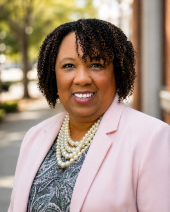
The Westminster Schools, Atlanta, GA
Biography
Audra Brown Ward is an Upper School Biology teacher at The Westminster Schools in Atlanta, Georgia, where she teaches AP® Biology and 9th Grade Health.
She is a College Board Workshop Consultant and has been a reader and table leader for the AP® Biology exam since 2003. Audra has led numerous AP® Biology Summer Institutes and one-day
workshops, contributed to various teacher guides and ancillary materials for AP® Biology textbooks, and currently serves as Moderator of the AP® Biology Online Teacher Community. She
is the co-author of the next edition of the AP® Biology review book, Fast Track to a 5, to be released this fall.
Audra's commitment to excellence in teaching has earned her numerous accolades, including the 2007 NABT Outstanding Biology Teacher Award for Georgia, and two Westminster awards: a 2021 O.
Wayne Rollins Faculty Award for Excellence in Teaching and a 2023 William A. Parker, Sr. Mentoring Faculty Award.
A dedicated member of the professional community, Audra served as the Region VI Coordinator for the National Association of Biology Teachers (NABT) from 2022 to 2024. She is also actively
involved in Alpha Kappa Alpha Sorority, Inc., The National Coalition of 100 Black Women, Inc., and the National Alumnae Association of Spelman College. Audra is a former president of The
Twenty Pearls Foundation, Inc., located in East Point/College Park, Georgia.
Originally from Cincinnati, Ohio, Audra holds a B.S. in Biochemistry from Spelman College and an M.S. in Biochemistry from the Georgia Institute of Technology.
Personal Statement
I have been teaching AP Biology in Atlanta-area schools for 23 years, and I spent four years at College Board, helping to develop the AP Biology Course and Exam Description as well as
professional learning workshops for AP Biology teachers worldwide. The question I wrestle with most is not whether my students passed the AP exam; it's whether they leave my class still
curious. My goal is not for every student to regurgitate memorized information. It is for them to develop the intellectual resilience and patience to sit with difficult content and make sense
of it; to figure out what happens when something goes wrong in a biological system and how to fix it. I want my students to leave my class as informed citizens who make better decisions about
their health and their environment, who can push back on misinformation with confidence, and who carry biology literacy into whatever path they choose, whether that path leads to medicine,
policy, education, or something else.
What drives my work with teachers is the desire for every teacher who comes through one of my workshops to leave understanding the AP Biology course more deeply, believing they can be an
effective teacher of the course, and equipped with resources they can use immediately. Because Kim Foglia was so generous, and her resources helped me so much as a new teacher, I try to pay
it forward. Generosity in teaching should be a given; when teachers are equipped and confident, students benefit, and that ripples far beyond just my classroom.
Sponsored by NABT and Carolina Science
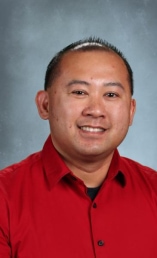
Ozark High School, Republic, Republic, MO
Biography
Ryan Lacson has spent the past four years as a high school biomedical sciences instructor at the Ozark Innovation Center, which is part of Ozark High School in Ozark, MO. He has taught for a total of 18 years, with stops that include rural, suburban, and urban school districts. His current teaching load includes AP Biology, as well as Project Lead The Way (PLTW) Human Body Systems, PLTW Medical Interventions, and Dual-Credit Medical Terminology. He also serves as one of the HOSA Future Healthcare Professionals sponsors, where he helps students prepare for healthcare-related competitions. He received his bachelor’s degree in Microbiology/Biotechnology from Missouri State University and his master’s degree in Biology from Washington University in St. Louis. He currently resides in Republic, MO with his wife Kari and daughter Jacey.
Personal Statment
As a teacher, I feel it is important for all students to have a well-rounded science education that is grounded in real world experiences, prepares them for future courses, and teaches them practical skills. As it pertains to allied health education, in addition to content knowledge, I feel it is important for students to be exposed to the wide variety of healthcare careers available to them. Healthcare doesn’t just consist of doctors and nurses; there are technicians, assistants, as well as non-clinical professionals that help keep a health system running smoothly. My goal is to expose allied health students to the wide variety of careers available to them, as well as teach them how to think critically and how to use science to solve complex problems, not just memorize facts.
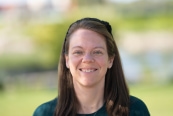
Los Alamos High School, Los Alamos, NM
Biography
Kyla is a science educator at Los Alamos High School in New Mexico, where she teaches AP Biology, Biology, and School of Choice Science. With academic backgrounds in mathematics, life science, and instructional design, Kyla brings an interdisciplinary perspective to science education that emphasizes inquiry, collaboration, and real-world application. Previously, Kyla taught mathematics at a school in Atlanta, Georgia, where she led professional development on creativity in mathematics and developed project-based learning units.
Kyla holds a Master of Science in Life Science with a focus in Mathematical Biology from the University of Tennessee and is currently pursuing a Master of Science in Organizational Performance and Workplace Learning with an emphasis in Instructional Design at Boise State University. She is an active member of the National Association of Biology Teachers, an AP Biology Reader, and a National Board Certification candidate. Her work includes curriculum development, professional learning community leadership, and partnerships with Los Alamos National Laboratory to provide authentic research experiences for students.
As a classroom educator, Kyla's goal is to create learning experiences that allow students to think and work like scientists. She believes students learn best when they are actively engaged in asking questions, solving problems, analyzing evidence, and collaborating with their peers. Through project-based learning, inquiry-driven investigations, and real-world scientific applications, she strives to foster curiosity, confidence, and scientific literacy. Ultimately, her goal is not only to teach biology content, but to help students develop the critical thinking skills and sense of wonder that will serve them long after they leave the classroom.
Troy High School, Lake Orion, MI
Biography
Rebecca Brewer is a nationally award-recognized high school biology teacher from Michigan with 25 years of teaching experience. A graduate of Michigan State University, she earned her Bachelor of Science in Biology and a Master of Arts in Curriculum and Teaching. Rebecca is the co-author of the high school textbook Biology Now and has authored educational materials for over a dozen organizations, including Science Friday, the National Center for Science Education, BSCS, the Fred Hutch Cancer Center, Science Communication Lab, and the Pulitzer Center. Working alongside life science education leaders both nationally and internationally, she has served as a Teacher Ambassador for the Society for Science to promote invention education, the Smithsonian Science Education Center to amplify socio-scientific issues, and The Economist to advance global science literacy.
Throughout her career, Rebecca has written and received 46 science education grants, including a $27,000 award as the top national recipient of the Voya Unsung Heroes Award. Her professional highlights include interviewing Nobel Laureate Dr. Jim Allison (pioneer of cancer immunotherapy), and she will be moderating a webinar with Nobel Laureate Dr. Phil Sharp (co-discoverer of RNA splicing and introns) this upcoming December.
Most recently, Rebecca authored four hands-on biotechnology resources for Uncommon Productions. This school year, she is collaborating with researchers from the University of Idaho's EMBER Program (Embedding Molecular Biology in Ecosystem Research), guiding her AP Biology students as they analyze the real-world impacts of climate-induced wildfires on microbial soil ecosystems.
Personal Statement
Biophilia—connecting with the natural world and having an understanding and appreciation for life's intricacies—best conveys my beliefs about teaching and learning. Some of my fondest childhood memories are tied to exploring my environment and trying to make sense of my observations. How did the ‘sensitive plant’ in my garden close its leaves when touched? Why did the flowers on our white hydrangea turn pink the following summer? How did my pet blind cave fish, Marco and Polo, find their food without eyes?
These early wonderings oriented me toward the biological sciences. I wanted to decode the hidden mechanisms of the biological realm and communicate them to others, a mission that shapes my work today as an educator and lifelong learner. In my classroom, I cultivate this same innate curiosity. I want my students to ask thoughtful questions, dive into biological complexities, and uncover explanations. I strive to build students' scientific literacy, leverage data to counter misinformation, and foster equity-centered practices. Understanding and conserving Darwin's "endless forms most beautiful" is my catalyst, contributing to a society that honors both our planet and all life.
Walters State Community College, Morristown, TN
Biography
Dr. Moore is an Associate Professor of Biology in East Tennessee. Her work centers on connecting students with the natural world through hands-on, experiential learning. She teaches courses spanning biology (non-majors, majors, and preservice teachers), ecology, conservation, forestry, wildlife, and fisheries.
With a background in freshwater ecology and herpetology, she is a strong advocate for field-based and hands-on education. She has developed numerous opportunities for students to learn beyond the classroom, including field studies, water-quality monitoring, wildlife and fisheries activities, forestry investigations, and partnerships with environmental and natural-resource organizations. Through these experiences, students develop practical skills while building connections with professionals from local and state agencies.
Beyond the classroom, Dr. Moore is actively involved in science education and professional service, including leadership with both the Tennessee Association of Biology Teachers and the Tennessee Science Teachers Association. In her free time, you will find her in the woods, along the nearest river or stream, or curled up with one of her many animals and a good book.
Dr. Moore’s work reflects a passion for helping students understand, appreciate, and protect the biodiversity and natural resources of Tennessee and the Appalachian region while inspiring the next generation of environmental and natural-resource professionals.
Personal Statement
I believe biology is for everyone. Every student, regardless of their background, previous experiences, or career goals, has a place in the study of life. My role as an educator is to help students discover that place and recognize that they are capable of understanding and contributing.
I believe that every student learns differently, and effective teaching requires flexibility, patience, and a willingness to meet students where they are. I strive to create an inclusive classroom environment where students feel comfortable asking questions, making mistakes, sharing ideas, and seeing themselves as scientists. Rather than expecting every student to learn in the same way, I use a variety of approaches—including discussion, visual resources, demonstrations, hands-on activities, laboratory experiences, and field-based learning—to give students multiple pathways to understanding.
Hands-on learning is at the heart of my teaching philosophy. Biology is the study of life, and I believe students should have opportunities to experience that life rather than only read about it in a textbook. Whether students are examining organisms, conducting water-quality assessments, identifying plants and wildlife, collecting field data, or investigating ecological processes, these experiences allow them to connect abstract concepts to the world around them. They also help students develop the confidence and practical skills necessary to apply what they have learned beyond the classroom.
Ultimately, my goal is not simply to teach students biology, but to help them become curious, confident, and engaged learners. I want students to leave my classroom with a greater appreciation for the living world and the understanding that biology is amazing!



The National Association of Biology Teachers empowers educators to provide the best possible biology and life science education for all students.
NABT, P.O. Box 335, Heber City, UT 84032
office@nabt.org | Fax: (202) 962-3939
(888) 501-NABT or (703) 264-9696
Thank you for visiting the NABT website.
Our privacy policy is found here.
Announcements for products or services on this website do not imply endorsement of or by NABT.
Website by Morweb.org
Copyright National Association of Biology Teachers