- About
- Membership
- Resources
- Awards
- Events
- Get Involved

Winner

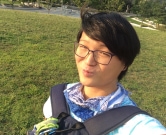
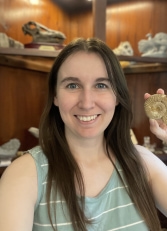
Tremont Consolidated School, Bass Harbor, ME
Biography
I’m a middle school science teacher at Tremont Consolidated School in Bass Harbor, Maine, where I teach Life, Physical, and Earth Science to grades 5–8. I hold a BS in Marine Science from Coastal Carolina University, a K–8 teaching certification from the University of Maine, and an MS in Science and Mathematics Education from Walden University. I am a National Board Certified Teacher, a National STEM Scholar, a NOAA Teacher at Sea, and a National Geographic Certified Educator.
I’ve been honored with the Presidential Award for Excellence in Science Teaching, the 2020 Maine County Teacher of the Year, and the Kevin McCarthy Education Innovation Award.
My teaching centers on place-based, interdisciplinary learning that connects students to the ecosystems in their backyard. Through projects like salt marsh restoration, NOAA drifter buoy tracking, and climate resiliency efforts, my students engage in hands-on science that extends beyond the classroom. I serve as President of the Maine Science Teachers Association and as an adjunct professor at the College of the Atlantic, where I teach integrated science methods. I collaborate with partners such as NOAA, the Gulf of Maine Research Institute, and the University of Maine RiSE Center to support authentic, field-based science experiences.
Personal Statment
I have taught science for the last 10 years, including biology, microbiology, HBS, and environmental science. Currently I am teaching animal health science for Herndon Career Center, which is part of Raytown Quality Schools. I strive to teach class content through a biology lens, encouraging inquiry and appreciating biodiversity. My goal is always to make science more accessible to students, and I enjoy organizing experiences through site visits, guest speakers and internships.
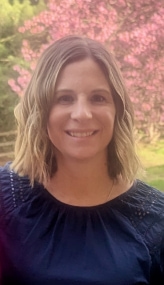
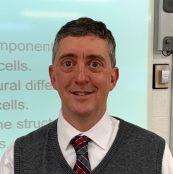
Abbott Lawrence Academy, Lawrence, MA
Biography
I have eleven years of experience teaching secondary science. I graduated with a double major in Biology and Psychology from Williams College and then began my career in Bridgeport, Connecticut teaching 7th grade Life Science and coaching middle school basketball for three years. I then earned my Master of Education in Human Development and Psychology at the Harvard Graduate School of Education. Since then, I have spent the past eight years teaching high school biology in Lawrence, Massachusetts. At Abbott Lawrence Academy, I teach a variety of biology courses for juniors as well as a year-long elective for seniors in Public Health. I am a member of my school’s Instructional Leadership Team and I was recognized as an Advanced Educator in my district in 2020. I am actively involved in the Early College program at my school, supporting high school students who are enrolled in an introductory biology course at Merrimack College. Additionally, I have also been an adjunct instructor at Merrimack College, teaching both introductory biology as well as the associated lab course. Last year, I was recognized as a Centers for Disease Control and Prevention (CDC) Science Ambassador for the 2024-2025 school year. I also earned a certificate in Instructional Leadership from the Harvard Graduate School of Education this past spring. By teaching biology and public health, I hope to encourage my students to have a broader understanding of both the world around them and of the interdisciplinary work that scientists do to keep our communities healthy.
Personal Statment
As an early career teacher, I had many mentors who helped shape my mindsets and philosophies about education. One mentor said to me early on, “Never tell a student something they can figure out on their own.” This has stuck with me ever since and has guided my philosophy that science education should be inquiry based and curiosity driven. The goal of science education should be for students to build background knowledge in the content area and to also build critical thinking, problem solving, and writing skills. The ultimate goal for me is to help advance educational equity for all students, no matter where they live. I hope to help foster students to become changemakers in their community through learning about biology, public health, and the life sciences. By making my course content accessible, relevant, fun, and data focused, I hope to encourage students to explore careers in STEM fields, as well as develop a broad understanding of the world around them. As a result, they will become more active, informed, and critical members of their community. I ultimately hope to help create a generation of students who use their knowledge for positive change in the world.
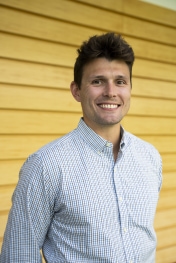
Newfound High School, Bristol, NH
Biography
I grew up in New Hampshire and have lived here all my life. After attending Keene State College, I obtained a position in the Lakes Region and have taught life science for 20 years at Newfound Regional High School. I have taught Physical Science, Chemistry, Zoology, Horticulture, Ecology, Biology, Early College Anatomy and Physiology, and AP Biology. I am the NRHS Science Department Chair and currently serve on the UNH Agroforestry Cohort.
Personal Statement
I believe science education should inspire curiosity and connect learning to the world around us. My goal is to create a classroom where all students feel valued, supported, and challenged to
think critically and explore deeply.
For the past 20 years at Newfound Regional High School, I have taught a variety of life science courses—including Biology, Ecology, Anatomy and Physiology, and AP Biology—focusing
on hands-on investigation and student inquiry. I want students to see science not as a collection of facts, but as a process of discovery that invites them to ask meaningful questions and
seek evidence-based answers.
As Science Department Chair, I collaborate with colleagues to strengthen curriculum and promote engaging, relevant instruction. My work with the UNH Agroforestry Cohort reflects my commitment
to lifelong learning and to connecting environmental science with practical, real-world applications.
Teaching science is both a privilege and a responsibility. I strive to model curiosity, integrity, and respect for evidence—qualities that empower students to become thoughtful,
informed citizens who understand the impact of science on their lives and their future.
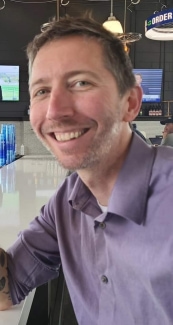
Archbishop Curley High School, Baltimore, MD
Biography
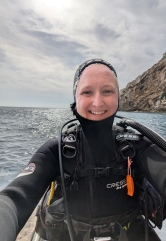
Mrs. Burton graduated from St. Mary’s College of Maryland with a Bachelor of Arts in Biology. She then earned her Master’s Degree from Towson University. She is pursuing her Administrator I Certification at Towson University and expects to be completed by May of 2026. Mrs. Burton enjoys being in the classroom and inspiring students to find their passion for science. She teaches AP Biology, Biology, Anatomy & Physiology, Biotechnology, Forensics, and Project Lead the Way Biomedical Sciences. Additionally, she is the co-moderator of the Pickleball Club and Science Olympiad Club. During the winter athletic season, Mrs. Burton serves as the Assistant Coach of the Swim Team. Yearly, she participates in the College Board Advanced Placement (AP) Reading for AP Biology. She is trained and certified by Project Lead the Way to teach Principles of Biomedical Sciences, Medical Interventions, and Biomedical Innovations. In 2024. In her spare time, she enjoys scuba diving, skiing, traveling, and reading a good book. She resides in Severna Park with her husband, two sons, and her beloved dog, Oshie. .
Personal Statement
My mission is to educate and inspire students to become empathetic, respectful, and responsible individuals. As a compassionate educator, I strive to treat every member of our school community with kindness, understanding, and empathy. I believe in the inherent dignity of every person and that everyone deserves to be treated with respect and fairness. These guiding principles shape every aspect of my teaching practice.
Within my classroom, students are empowered to achieve beyond their own expectations while feeling safe to take risks, make mistakes, and learn from them. I aim to create a rigorous,
supportive, and engaging learning environment that promotes both academic excellence and personal growth. Mutual respect, trust, and collaboration are at the heart of our classroom culture.
Students are encouraged to use their talents and skills to serve others and make a positive impact on their community.
Honesty, fairness, and ethical behavior are central to my teaching philosophy. I am committed to fostering a safe, inclusive, and welcoming environment that celebrates diversity and ensures
every individual feels valued and heard. In all interactions with students, colleagues, and parents, I strive to model integrity and ethical behavior. I also encourage students to reflect on
their own values, think critically, and make thoughtful, ethical decisions both inside and outside the classroom.
William Cullen Bryant High School, Long Island City, NY
Biography
I had wanted to be a science teacher since I was in 11th grade. When I started volunteering at my local science museum, I saw the power that science communication could have. Four year olds could be asked what they saw when water was dropped onto marker-colored coffee filters, and leave the museum knowing how capillary action worked. In undergrad I hit every bite I could find, service learning fellow, peer counseling, residence advisor, all in the name of making me a better teacher. By the time I got funded for grad school, I was already highly qualified. Through two years of both science and special education, I continued to expand my work. Across my nine schools and 14 principals, I have only ever taught Title 1, worked with two white students, and predominantly taught science in Spanish. I firmly believe that those with more must redistribute to those with less. I don't have that for finance, but I do have that knowledge. Every day, I pay forward what is necessary to better society. I expect those around me to do the same.
Personal Statement
As a practitioner of my "Performance Pedagogy," I believe in furthering my work through Meliora, Magic, and Milieu. How much do you examine yourself? What ethos do you create when students enter your world? What kinds of people do you want your students to become? We're all but poor players. All the world's a stage. Every day I ask my students "What do you want to do, and who do you want to be?" While few students confidently raise their hands at the start of the year, all hands rise by the end of the show. Across my career I've seen so much poverty, so much generational trauma, so many souls barely fourteen, but weary from a lifetime. Through biology I hope to show students awareness of both themselves, and the world around them. What do you see? What do you think will happen next? How does that make you feel? My classroom shows students how to think for themselves and navigate the entropy of life. I know my work is good. I hope it is good enough.
Upper Merion Area High School, King of Prussia, PA
Biography
I earned my B.S. in Secondary Biology Education from The Pennsylvania State University and my Masters degree in Education from Cabrini University. This fall will be my 16th year in the classroom. I currently teach at Upper Merion Area High School where I have taught all levels of Biology from college preparatory to advanced placement. I am currently the advisor of the STEM Science Club and Mini THON club and have coached both soccer and track and field teams in the past. I also served on our school’s instructional support team for seven years. When I am not teaching, I enjoy spending time with my three children and husband, exploring the outdoors and watching Philadelphia sports teams.
Personal Statement
I enjoy teaching through the use of phenomena, exploration, and data sets. A typical day in my classroom involves a lot of student collaboration and you would notice students actually doing science. Regardless of the level being taught, I am a firm believer that all students deserve a chance at the “good” or “fun” lessons. On a recent inservice day, a presenter asked us to write down one thing that we wanted our students to remember at the end of the school year. For me, it is not about recalling the organelles of the cell, the steps of protein synthesis or how to complete a punnett square. Being an excellent teacher is much more than the content - it is about fostering a joy of lifelong learning, curiosity, and exploration that pushes students to become a better version of themselves. I am hopeful that my students will remember their Biology class as a positive one that was filled with acceptance, challenges and experiences that they will remember throughout their lives.
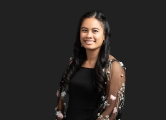
Justice High School, Falls Church, VA
Biography
Kirsten has taught science for Multilingual Learners (MLs) for eight years (both Environmental Science and Biology). She is also the Science Department Chair at Justice High School in Northern Virginia, where her classes are a unique mixture of scientific content and English language development. As a first-generation Filipino American, she strives to emphasize the importance of diverse perspectives and backgrounds in science. She has created much of the ML Environmental Science and ML Biology Curriculum that many teachers in Fairfax County Public Schools use today.
Kirsten is passionate about accessibility and experimentation. As a 2019-2020 Fulbright Scholar, she utilizes her experiences teaching English at Universidad Nacional in Bogota, Colombia, to create and implement content that is accessible and rigorous. As the recipient of multiple classroom grants, she emphasizes both place-based and project-based learning. Her focus on experiential learning has allowed students to transition from mainly vocabulary-dense memorization to independent researchers, regardless of their language level, and has earned her numerous awards and fellowships. She is also currently serving as the High School Division Leader for the National Science Foundation, as well as the Science for All Chair of the Virginia Association of Science Teachers.
Personal Statement
When I first started teaching Multilingual Learner (ML) science, I was never formally trained in ML pedagogy. Nevertheless, I sought experiences (the Fulbright, external fellowships, and leadership positions) to improve accessibility in science. Through experimental design that empower students in rigor and choice, I try to promote language development alongside science vocabulary development in Biology and Environmental Science.
I believe that teachers should be consistent learners, and I am constantly searching for new and innovative methods of teaching to make the learning experience more memorable for my students -as well as myself. I have created and shared many resources for engaging, accessible curriculum and presented at multiple conferences. Whether students are learning about migration patterns through butterfly experiments or seeing cellular respiration in action through balloons and yeast, I want educators to promote the fun in science and for students to leave my classes with critical thinking skills and curiosity.
Hopwell Valley Central High School, Pennington, NJ
Biography
I am a high school biology educator at Hopewell Valley Central High School in Pennington, NJ. I have taught all levels of biology over the last 10 years, and currently I teach AP and Honors Biology. I graduated from The College of New Jersey in 2015 with a B.S. in Biology-Secondary Education. I have dedicated my career to participating in and leading professional development that promotes student engagement and scientific literacy. I spent the early part of my career as a board member of the Biology Teachers Association of NJ. Most recently, I participated in the Humane Genetics study led by Dr. Brian Donovan, which aimed to reduce racism in the biology classroom by revising teaching practices in genetics. The work in this study inspired me to further pursue my education through the Masters in Biological Sciences program at Clemson University, where I am currently enrolled.
Personal Statement
My desire to become a teacher came from the experience I had with undergraduate research. I was lucky enough to study under Dr. Tracy Kress for all four years of my undergraduate at TCNJ, where I eventually published my work in RNA Biology. I realized entering the lab for the first time as an undergraduate that I never really understood how science worked in the real world at all. This experience set me on a path to provide a classroom experience where we don’t just learn about science, rather we “do” science just like a real scientist does everyday. I want students to leave the classroom with both knowledge and skills that can make them informed citizens in our ever-changing world.
Since the start of my teaching career I have worked on bringing innovative practices to the classroom such as problem-based learning and phenomena-based learning to promote stronger scientific literacy in students. I have had a lot of support from great colleagues and mentors over the years, including Rob Richard, my college professor who started it all and nominated me for this award. In my career, I hope to inspire both my students and other educators to improve the way we teach and learn science.
New Washington Middle/High School, New Washington, IN
Biography
I have taught high school science for eight years. I hold a Bachelor's degree in Biology from Hanover College and a Master's in Curriculum and Instruction from Purdue University. Currently, I am the only full-time high school science teacher at New Washington Middle/High School, where I teach a variety of classes, including Biology, Earth Space, Chemistry, Anatomy, AP Biology, and an elective Prehistoric Life class. I am also the Health Services Academy Team Lead. As Team Lead, I plan and implement activities with my team of teachers to help students interested in careers in healthcare explore their options. Additionally, I am the foster mom for our school's therapy dog in training, Bluey. She lives with me, my husband, and two daughters and comes to school with me each day. Outside of school, I enjoy gardening with native plants, fossil collecting, and listening to podcasts about science, especially those related to paleontology, evolution, and the history of life.
Personal Statement
I believe a strong biology background is necessary for students to grow up and be scientifically literate and informed citizens. Climate change and the unsustainable use of natural resources are existential problems that our students have to face now and in the future. As a biology teacher, I aim to empower my students with the scientific knowledge and skills they need to make informed decisions. To do this, I have been using project based learning as often as I can in my classroom. Students thrive when they are driving their own learning while also doing something that makes a real positive impact outside the classroom. Some projects we have completed in the past few years include designing a native pollinator garden at school, growing hydroponic vegetables, planning and running a teddy bear health clinic at our neighboring elementary school, and creating a museum display at school that showcases our local fossils.
Huron High School, Huron, OH
Biography
I fell in love with the natural world at an early age. My passion for science began on the coral reefs of the Florida Keys with my father, a scuba dive captain. Back in Ohio, a high school teacher invited me on several life-changing experiences: three weeks studying geology in 18 national parks, marine biology in the Bahamas, and ecology in the Grand Tetons. Since then, I’ve earned a B.A. in Microbiology, an M.A.T. in Science Education, and spent my career teaching thousands of students.
I’ve since led hundreds of my own students on field-based learning adventures across the country: places like the Grand Canyon, Yellowstone, the Everglades & the Florida Keys; as well as involved my classes in local water quality monitoring projects. I’ve also supported students’ growth through head coaching roles in track and cross country and as our National Honor Society Adviser.
I’m married to an incredible fourth-grade teacher, and we have three wonderful children. I currently teach Anatomy & Physiology for the University of Findlay, Biology for Bowling Green State University, and general biology (all at Huron High School); where I have the privilege of teaching every student who passes through our doors.
Personal Statement
As a student, my teachers truly changed my life. In elementary/middle school, they saw and nurtured my potential. In high school, they showed me the value of authentic learning. In college, they gave me opportunities to learn deeply, teach, and conduct meaningful research. Because of them, I see myself first and foremost as a teacher of students, not just of science or biology.
My goal as an educator is to use my love and passion for biology to help shape students in positive ways and support them on their own life journey. I believe it’s essential to build strong connections with students and to create a classroom environment they love coming to. Hopefully, it is one that sparks deep, intrinsic motivation to learn.
Creating that “magic” takes intentional effort, but it always begins with warmth, support, optimism, and genuine care. I’ve never forgotten what it was like to be an adolescent trying to make sense of a complicated world. That memory continues to guide how I teach and why I’m so committed to doing it well.
Badger High School, Lake Geneva, WI
Biography
The 2025-2026 school year marks my 10th year in public education after graduating with a B.A. in Biology from Lawrence University (Appleton, WI) in 2015. I began my teaching career at Williams Bay High School, where I taught AP Biology, on-level and honors biology, and A&P for 6 years while earning my Master of Science in Science Education through Montana State University. From 2022-2024, I taught Dual-Credit Biology and other life science courses at Whitewater High School. During that time, I also served as team lead for the science department's PLC, began working in storyline curriculum development through different writing teams, and started to lead professional learning sessions. It has been incredibly rewarding working with both students and educators of all ages and experiences to help make science education accessible to everyone. Currently I teach multiple life science courses at Badger High School in Lake Geneva, WI and an online graduate course through Montana State. Recently I have been accepted as a member of the 2025 Cohort for HHMI’s Ambassador Academy. At each point in my teaching journey, I have also coached or sponsored various sports and clubs including basketball, football, and science club. When I am not in the physical or virtual classroom, I love nothing more than spending time with my supportive wife Carly, our dog Winnie, and both our families.
Personal Statement
I believe quality life science education provides an accessible learning environment for all students. My goal is to design and facilitate opportunities for every student to make meaning of authentic data, make use of science practices, and make sense of the incredible natural world around them. These features of a 3D life science experience, coupled with a student-centered approach where coherence on their behalf is highly valued, help build a classroom culture where we (students and teacher) are all learners and all voices can be heard. This goal allows students to become the best version of themselves as a critical consumer of information, despite the persistent stigma of some people “not being able to do science”. Someone once told me "only a few players make it to the NBA, but anyone in the world can play basketball ", and I firmly believe that science education follows suit. Even if formal research and academia are not forecast in the future, every student has the capability to hone the knowledge and skills needed to be successful in the science classroom. Given the current literal and societal climates we inhabit, my belief in life science education has been strengthened given the need for scientific literacy in all aspects of our society.
Central Campus, Des Moines, IA
Biography
Dr. Gregory J. Barord grew up in the desert of Phoenix, Arizona but became fascinated by cephalopods at the age of five and wanted to become a Marine Biologist. Dr. Barord received his B.S. from Texas A&M University at Galveston and M.Phil. and Ph.D. from the City University of New York - Graduate Center. Currently, he is in his twelfth year as the Marine Biology Instructor at Central Campus in Des Moines, Iowa. The program allows students to not just explore careers but to run an advanced laboratory and aquarium, while also taking college-level courses. Dr. Barord is also a Conservation Biologist for Save the Nautilus, helping to lead the team on improving nautilus conservation efforts throughout the world. He serves in several leadership roles locally, nationally, and internationally with the primary goal to improve ocean literacy and engage students, and the community, in marine conservation.
Personal Statement
I want students to seek out opportunities to fail, as opposed to “safer” options where they know they will probably succeed. This might mean applying for a grant, trying a new study habit, or working with a team. When students are comfortable with being a little uncomfortable, or a lot sometimes, that is where true growth and learning happen. Hopefully, this mindset is something they carry with them for the rest of their lives.
Olathe South High School, Olathe, KS
Biography
I have always had a passion for science teaching, graduating from the University of Alabama with an Honors degree in Marine Science and Biology, and a second degree in Geology, with a goal to become a professor in the College of Sciences. I continued my education, graduating with a Master’s of Marine Science in Geology before moving to the Louisiana State University for Physical Geography. It was here that I realized there was a disconnect at the lower levels of education, that fewer students were coming to college prepared for rigorous science. It ignited my passion to teach science and, more importantly, cultivate a passion for science at a formative age to increase retention. Students need exposure to place-based learning where they can see scientific principles in action and understand how they are connected to the natural world. I have seen firsthand how students' perceptions of science change by being hands-on in the classroom as well as outside of the classroom, rather than just learning concepts on a page.
Personal Statement
It is my mission to create lifelong connections between scientific principles and the natural world that students inhabit. I aim to empower students to pursue their passion while instilling in them a sense of stewardship over their natural space.
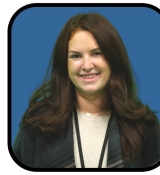
Herndon Career Center, Raytown, MO
Biography
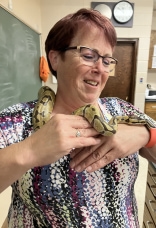
I live with my spouse, two children, two dogs, two cats, and a tarantula. Not only is my house a zoo, but also my work place, as I teach from a classroom at the Kansas City Zoo and Aquarium. I have an affinity for native plants, and you'll often find me outside trying to slowly turn my yard into a prairie without drawing the attention of the HOA. More recently I have joined the Kansas City Women's Chorus and am working with the Guns to Gardens Task Force, both programs that work to improve communities in and surrounding the KC Metro. I love crocheting, reading, finding bugs to take pictures of, frowning at invasive species on the side of the road, and traveling. I just returned from a trip to Spain where I was able to become scuba certified!
Personal Statement
I have taught science for the last 10 years, including biology, microbiology, HBS, and environmental science. Currently I am teaching animal health science for Herndon Career Center, which is part of Raytown Quality Schools. I strive to teach class content through a biology lens, encouraging inquiry and appreciating biodiversity. My goal is always to make science more accessible to students, and I enjoy organizing experiences through site visits, guest speakers and internships.
Robbinsville High School, Robbinsville, NC
Biography
I have been teaching science in Graham County Schools for the past 18 years, covering everything from 7th grade science to AP Biology. I graduated from NC State University with a Master’s degree in Microbial Biotechnology in 2007, but decided to pursue teaching as a career after working as a teacher’s assistant in the biology department during my Master’s work. I have had success writing grants, being awarded over $300,000 for various projects in my district. For years, I led an after-school program focused on girls in STEM. I sponsor the STEM Club, Science Olympiad, and outdoor club at my school. I am National Board Certified and was a 2023 recipient of the Burroughs Wellcome Fund Career Award for STEM Teachers. I live in the mountains of Western North Carolina, and when I can, I like exploring the trails and creeks of the area with my wife and two daughters.
Personal Statement
My outlook on teaching is that we, as teachers, must make learning relevant to students’ lives and interests. I love teaching with hands-on labs and activities, and feel that students learn best and are most engaged when they are active and participating. In the biology classroom, this can look like simple observation labs or more intensive labs such as those in the AP Biology course. Students need experience asking questions, planning experiments, and analyzing data to prepare them not only for college, but their lives beyond the classroom. I want them to be curious, skeptical, and critical thinkers as they encounter a world full of half-truths and misinformation. Getting students excited for science learning can be a challenge, but I believe that you need to engage them early and often with hands-on learning. As long as I am a teacher, I will continue to help students think critically, ask good questions, and analyze new information - skills that will benefit them throughout all walks of life.
Huntington High School, Huntington, WV
I have been teaching Honors and AP Biology at Brentwood High School for 10 years. I earned my master’s degree in Biology from Middle Tennessee State University with a research focus in Biology education. In 2013, I attended my first NABT to present my research and have made it a priority to attend since. I was honored to receive the Graduate Travel Award in 2014 and the Outstanding New Biology Teacher Award in 2017. This year marks my 11th NABT conference and 8th time presenting. As a member of the AP section, I have been involved in the AP community as an AP Daily instructor and AP reader for 6 years now. On the state level, I joined TNABT as a founding member and served as secretary for several years. My overall goal for my students and myself is growth, and involvement with NABT is a major contributor to that.
My role as a biology teacher is to prepare my students for what comes next inside and outside the classroom. I am compelled in my teaching to not only bestow my fascination with biology and my content knowledge to my students, but also to practice science skills throughout our daily interactions. In a society where there is a seemingly growing distrust of scientists and social media requires no credentials to spread information, having students engage with the process of science as much as possible can give them the skills set to recognize science from non-science. Critical thinking skills allow students to question assumptions, look for evidence, and apply logical reasoning to situations. When leaving my course, my hope is that they can combine biology content knowledge and critical thinking skills and apply them to decisions such as whether to prescribe the opioid, get vaccinated, or eat GMO foods. I thoroughly enjoy the challenge of instilling an appreciation for biology and these foundational skills in my students so that they can grow and make informed decisions as individuals.
Mason County High School, Maysville, KY
Biography
Dedicated to fostering a love for science, Cayeann Cowan is a passionate educator committed to igniting curiosity and critical thinking in her students. Cowan strives to inspire the next generation of innovators through engaging Inquiry based hands-on experiments, thought provoking discussion, and personalized mentorship. Cowan aims to cultivate a deep understanding of the natural world and its phenomena with an ultimate goal of empowering young minds to question, explore, and contribute to the ever-evolving field of science while nurturing a sense of wonder in a foundation for lifelong learning.
Cowan earned a Bachelor of Arts in Education and a Masters in teacher leader from Northern Kentucky University. As an educator, Cowan has served both high school and middle school students in the areas of science and math from grades six through twelve. Currently, Cowan serves as a high school Biology teacher at Mason County High School in Maysville, Kentucky, where she helps her students dissect complex scientific problems and grow inspiration.
With a class filled with movement, laughter, and a sense of inspiration, Cowan infuses her lessons with creativity and vitality. It is her ultimate goal to build relationships and leave a lasting impression on all who enter her classroom.
Personal Statement
“Find a job you love, and you will never work a day in your life.” This quote has guided my journey as an educator and continues to shape my approach to teaching. I believe that when students and teachers alike find joy, purpose, and passion, education transforms from a task into a lifelong pursuit of growth and discovery.
Teaching biology is not just a profession—it is a calling. Each lesson is an opportunity to spark curiosity about the living world, build scientific confidence, and foster a lasting appreciation for the complexity and beauty of life. I strive to connect biological concepts to real-world experiences, showing students that biology is not just a subject, but a way of understanding the world around them. By leading with passion and curiosity, I hope to inspire students to explore, ask questions, and discover a path in science—or any field—that makes each day feel meaningful.
Hoover High School, Hoover, AL
Biography
I am in my 13th year of teaching, and I am so happy to be in my fourth year at Hoover High School. Before finding my way to Hoover, I spent nine great years teaching at Thompson High School.
I started my academic journey with a Bachelor of Science in Biology and Psychology from Houston Baptist University, and then went on to earn my teaching certification (a B.S. in Secondary Education) from the University of Alabama at Birmingham. A few years later, I completed my Master of Arts in Teaching (MAT) in Secondary Education/Biology from the University of West Alabama.
Over the years, I've had the pleasure of teaching a variety of science courses, including General and Advanced Biology, Human Body Systems, Environmental Science, and AP Biology. This school year, I'm focusing on Advanced Biology and AP Biology, and I'm honored to be the sponsor for the National Honor Society chapter at Hoover.
When I'm not in the classroom, I love traveling and, most importantly, just being with my husband, four children, extended family, and friends!
Personal Statement
My commitment is to lifelong learning, ensuring I fully grasp the complexities of the content so I can empower my students to do the same. I enjoy developing teaching methods that help students make clear connections across the curriculum, transforming isolated facts into a complete understanding of life's many amazing concepts. My deepest hope is to enthusiastically engage and inspire students with the captivating and awe-inspiring nature of biological study.
Harris County High School, Hamilton, GA
Biography
Brittany Moss is a dedicated science educator at Harris County High School (HCHS) in Hamilton, Georgia, where she's taught for 19 years. She has taught a wide-range of science courses including Biology, AP Biology, Environmental Science, Oceanography, and Earth Systems.
A passionate lifelong learner, Moss prioritizes attending professional development and reading to deepen her understanding, especially in marine science. She's a Guy Harvey Conservation Educator and integrates ocean conservation themes throughout her teaching. Outside of the classroom, she enjoys traveling, reading and scuba diving. She has been married to her husband Chris for 16 years and they have two sons, Luke (15) and Lincoln (13).
Personal Statement
Life is a series of tradeoffs. Make sure your outputs are worth your inputs!
Teaching science for nearly two decades, I've seen firsthand that staying current on educational trends and news is key to keeping the classroom vibrant and engaging for everyone. My personal philosophy centers on moving past "sit and get" instruction in favor of inquiry and hands-on research. I thrive on creating challenging activities that actively involve students in their learning.
My goals as a biology teacher are firmly rooted in providing a real-world context for the content. This means constantly staying up-to-date on current events and advancements in the life sciences. I achieve this primarily through STEAM activities, which allow students to build a deeper understanding by directly connecting the material to practical applications. Furthermore, my involvement in sponsoring clubs and coaching has been invaluable, as it has deepened my love for teaching and helped me build better relationships with, and understanding of, my students.
Eva Legard, Baton Rouge, LA
Biography
I have always had a passion for science teaching, graduating from the University of Alabama with an Honors degree in Marine Science and Biology, and a second degree in Geology, with a goal to become a professor in the College of Sciences. I continued my education, graduating with a Master’s of Marine Science in Geology before moving to the Louisiana State University for Physical Geography. It was here that I realized there was a disconnect at the lower levels of education, that fewer students were coming to college prepared for rigorous science. It ignited my passion to teach science and, more importantly, cultivate a passion for science at a formative age to increase retention. Students need exposure to place-based learning where they can see scientific principles in action and understand how they are connected to the natural world. I have seen firsthand how students' perceptions of science change by being hands-on in the classroom as well as outside of the classroom, rather than just learning concepts on a page.
Personal Statement
It is my mission to create lifelong connections between scientific principles and the natural world that students inhabit. I aim to empower students to pursue their passion while instilling in them a sense of stewardship over their natural space.
West Harrison High School, Gulfport, MS
Biography
I’m entering my 12th year as a high school Biology teacher at West?Harrison High School. I earned my Master’s in Biology Education from William Carey University, and every day I find joy in mentoring students and sharing my passion for science.
As part of my commitment to advancing K–12 science education, I’ve served on several committees focused on improving curriculum and instructional practices. I also serve as a board member of the Mississippi Science Teacher Association, acting as District Director for the six coastal counties—working collaboratively to support fellow science educators, foster professional development, and enhance student engagement across the region.
My teaching philosophy centers on creating an inclusive, rigorous, and student?centered environment—one where every learner feels challenged and supported. I strive to inspire students to think critically, work collaboratively, and carry their love for science beyond my classroom.
Personal Statement
I believe that every student can learn and deserves a welcoming, engaging space to grow. As a biology teacher, I’m passionate about breaking down complex concepts into hands-on, inquiry-driven experiences—whether in the lab or the classroom—because research shows that experiential, activity-based learning deepens understanding across diverse learners. Educating future scientists and informed citizens means nurturing critical thinkers who are curious, confident, and capable of approaching problems with empathy and rigor. By creating inclusive, inquiry-based classrooms that celebrate mistakes and diverse strengths, I prepare students not just for tests, but for real life.
Arizona College Prep High School, Chandler, AZ
I hold a Bachelor of Science in Biology with a pre-med focus and a minor in Spanish from Arizona State University (2009). I also hold a Master of Education with Secondary Certification in Biology from Northern Arizona University (2012). I have been an integral part of Dr. Camille Casteel High School in the Chandler Unified School District in Arizona for the past 9 years.
My teaching experience spans grades 7 through 12, where I have engaged students in various science courses including 7th and 8th grade Gifted Science, Honors Biology, AP Biology, AP Research, Biotechnology 1, and Biotechnology 2. Alongside teaching, I have also assumed leadership roles, serving as the Science Department Chair at Dr. Camille Casteel High School, mentoring new science instructors across the district, and acting as the Chandler Innovation Fair Coordinator at my site. I received the Sandy Lundberg Educator of the Year Finalist award and am a Center for Disease Control Science Ambassador Fellow.
The teaching philosophy for high school biology education should be rooted in the belief that biology is a fundamental and dynamic science that helps students understand the natural world and their place within it. As a teacher, I have the opportunity to cultivate curiosity, critical thinking, and a sense of responsibility toward the environment and society. I encourage students to ask questions and explore biological concepts through inquiry-based learning, fostering an environment where curiosity is welcomed. I also believe that biology is a science that requires students to analyze data, draw conclusions, and solve complex problems. Students also need to connect biological concepts to real-world issues and everyday experiences. I try to show students how biology relates to their community, nation, and global challenges through topics like conservation, public health, and biotechnology. I also value diversity and inclusivity by recognizing and respecting the diverse backgrounds, experiences, and perspectives of my students. By fostering a love for biology and an understanding of its relevance to society, I can help students become informed citizens who are capable of making positive contributions to their community and nation.
San Juan College High School, Farmington, NM
Biography
I teach High School Biology and Physical Science at San Juan College High School in Farmington, NM. I am also the Asian American Representation Club and the Science Research Club sponsor of our school. Recently, we were awarded as the NAISEF School Partner award which provided my Native American (NA) students the opportunity to compete in the largest Science Fair event for NA in the Nation. 2025 will be my third year as the Society for Science Teacher Advocate where my goal is to increase the number of underrepresented student participants in Science Research competitions.
NM provides educators many opportunities for professional growth. I have been a facilitator & presenter for numerous Professional Developments and also been a Science Educator Fellow at the UNM ROSE Program where I learned cutting edge technology on molecular visualization & analysis of proteins. I also served as a Teacher Intern at the Gene Lab for High Schools though NASA. All of these opportunities helped me become a part of creating a pipeline for students pursuing various Science careers of their interests.
Personal Statement
I am fortunate to teach in a very diverse community. I take advantage of this greatly so the lessons that I design and classroom activities we do centers on awareness of our Biological and Genetic diversity, predisposition of conditions/diseases based from these factors and many more. I also incorporate a lot of place-based lessons since the four corners (the region where I teach), seems to be barren and empty, but is full of life and biodiversity. I want my students to appreciate our community but develop curiosity to explore the vast world beyond our borders. We do a lot of nature works but when the weather doesn’t allow it, we do hands-on activities, some lectures backed up by Total Physical Response (TPR), a language-teaching method where teacher and students use movements to better understand and/or remember new words, and Engineering design exploration. I make sure that my students understand that Science is not easy, but it can be fun, especially if the outcome of discovery benefits us.
St. Michael's Prep, Austin, TX
Biography
I earned my B.S. in Biology at The University of Texas at Austin, my M.Ed. in Curriculum and Instruction in Science Education from The University of Texas at Arlington, and my Biotechnician Assistant Credential from Biotility and The University of Florida. I’m certified in Texas for Science 8-12 and earned a credential from the UTeach Academy of Innovative Teaching and Learning. I have taught science in both public and independent schools, and have worked in curriculum development and science materials for a school district, a university, and a textbook company. In addition to teaching at St. Michael’s Prep in Austin, I currently participate in the High School Research Initiative at UT-Austin, serve as a BACE skills evaluator, and have presented most recently for the Fulbright Teacher Excellence and Achievement Program at California State University-Chico and for the UTeach STEM Educators Conference.
Personal Statement
It was my own AP Biology teacher who inspired me to love biology, and now I strive to honor her legacy by creating a classroom where students feel a sense of belonging, safety, and value. When students feel secure, they’re more likely to take academic risks, ask questions, and embrace the sometimes uncomfortable learning process. I build this community by learning about my students, incorporating their interests into lessons, and modeling vulnerability, curiosity, and a love for learning.
Each unit begins with a relevant, engaging phenomenon, followed by student-generated driving questions. This inquiry-based approach empowers students to take ownership of their learning and see science as something they do, not just memorize. We start each class with a theme song tied to the day’s topic, creating joyful rituals that reinforce learning and student voice. Students can even contribute songs—as long as they’re clean and connected to the content.
Science is creative, dynamic, and full of wonder. Through modeling, data analysis, and collaborative exploration, I help students connect biology to chemistry, physics, society—and themselves.
I want my students to be thoughtful, informed citizens. Whether or not they pursue science careers, they should be able to analyze scientific claims in the media, think critically about data, and understand how science shapes their lives. As a Texas teacher, I work to deepen their understanding of evolution as a unifying principle. My ultimate goal is to nurture curiosity, confidence, and critical thinking that lasts long after they leave my classroom.
Bozeman High School, Bozeman, MT
Biography
This fall marks my eleventh year teaching in Montana public schools. I currently teach Biology and AP Environmental Science at Bozeman High School in Bozeman MT. Last year I earned my National Board Certification in Science (Biology) for Adolescence and Young Adulthood. My professional preparation includes an undergraduate degree in Environmental Studies from the University of Montana in Missoula, MT (2002) and a Master of Arts in Teaching from Lewis and Clark Graduate School in Education and Counseling in Portland, OR (2013). Prior to becoming a classroom teacher, I spend fifteen years in informal science education working for non-profit organizations, as well as state and federal agencies.
Personal Statement
Throughout my career, I have consistently sought to make biology both meaningful and engaging for my students. My teaching is grounded in passion, creativity, and a belief that science is best learned when it connects students to their lives, communities, and the ever-evolving world around them. My biology classes have participated in an aquatic invasive species monitoring project that I developed in partnership with Montana Fish, Wildlife & Parks and the USGS Rocky Mountain Research Station. Students engaged in fieldwork that connected classroom learning to ecological principles in their local environment. This topic resonates with students because zebra mussel introduction was suspected in a nearby waterbody, and they began noticing an increase in local boat inspection stations. Additionally, I was involved in the SEPA grant (PHAGES) in collaboration with Montana Technological University. This program trained science teachers to set up satellite labs and conduct bacteriophage research with students. Through this initiative, students learned microbiology lab techniques while contributing to authentic, real-world research—searching for bacteriophages that could support the development of treatments for antibiotic-resistant bacteria. Although the SEPA grant has ended, I am continuing the project independently with colleagues, reflecting my commitment to long-term, meaningful science engagement. My teaching philosophy is rooted in the belief that biology must be relevant, dynamic, and accessible.
West High School, Salt Lake City, UT
Biography
I grew up in Rhode Island exploring the coastal ecosystems of New England. A childhood in the ocean state instilled a love of the outdoors that naturally pushed me towards studying Biology. Eight years ago, I traded the ocean for mountains and moved to Salt Lake City. As an avid climber, I was eager to start a new adventure in the west. Living in an entirely different biome has pushed me to think about my favorite biological concepts through a new lens. I am constantly in awe of the biodiversity surrounding me and love that I can quickly escape to the desert during long winters! I spend the majority of my free time climbing, mountain biking, or flexing my creativity through sewing and knitting projects.
Personal Statement
In my teaching, I strive to create lessons that allow all students equal access to opportunities to learn. I want students to see themselves in the content they are learning and feel safe while they are in my classroom. In the last decade we have seen how essential a basic understanding of biology is to society's wellness and safety. Through my teaching, I hope that I am helping to create a generation of humanitarians that are dedicated to protecting the natural world. Working with young people shows me how much potential our species has and gives me hope that we can make the world a better place for everyone.
Rock Springs High School, Rock Springs, WY
Biography
I am a science teacher at Rock Springs High School in Rock Springs Wyoming. I have taught all types of science, including physical science, marine science, forensics, biology, and environmental science. I have also taught all age groups from pre-K through college - and can tell you from experience that the only real difference in the age groups is height.
I started teaching Spanish at a religious school in 1994. After finishing my college degree I started my professional career teaching Spanish at a high school in Las Vegas. From there, I moved to Oregon and started focusing on teaching science. I have taught and most of the western states at one point or another. I love the challenge of teaching and figuring out different ways to make the world come alive in my classroom. My goal is to create lifelong learners.
Personal Statement
As a teacher, my role isn’t simply to prepare students for a test. It’s to open their eyes to the world around them, to show them that science isn’t just something to be studied but something to be lived. Science is life. It’s not just a heavy textbook, not just a collection of vocabulary words and diagrams. It’s everything we experience—every breath we take, every plant in our yard, every decision we make about life.
I believe that education is far more than grades. Anyone can memorize and regurgitate facts to pass a test. This kind of learning is Pavlovian—stimulus and response, repetition without deep understanding. But real learning is about application. It’s about taking knowledge from one area of life and transferring it to another. It’s about seeing connections that weren’t obvious before and using that understanding to solve problems, to innovate, and to navigate the world with confidence.



The National Association of Biology Teachers empowers educators to provide the best possible biology and life science education for all students.
NABT, P.O. Box 335, Heber City, UT 84032
office@nabt.org | Fax: (202) 962-3939
(888) 501-NABT or (703) 264-9696
Thank you for visiting the NABT website.
Our privacy policy is found here.
Announcements for products or services on this website do not imply endorsement of or by NABT.
Website by Morweb.org
Copyright National Association of Biology Teachers